Goshuin: Japan's temple & shrine stamps, explained
At thousands of shrines and temples across Japan, you can receive a goshuin (御朱印) — a one-of-a-kind seal, brushed by hand in black ink and stamped in vermillion, recording that you came and paid your respects. It is often called a "stamp" in English, but it is not a souvenir or a stamp-rally mark: it is a sacred record of worship. This guide explains what a goshuin is, the goshuincho book you collect them in, how to receive one respectfully, the etiquette that matters most, and the Japanese you'll use at the counter.

What a goshuin is
The word goshuin (御朱印) literally means "honorable red seal." In practice each one combines two things: red ink stamps — the shrine or temple's name and emblem, pressed in vermillion — and hand-brushed black calligraphy giving the place's name and the date of your visit. Because the calligraphy is written for you on the spot, no two goshuin are ever quite the same, even from the same place on different days.
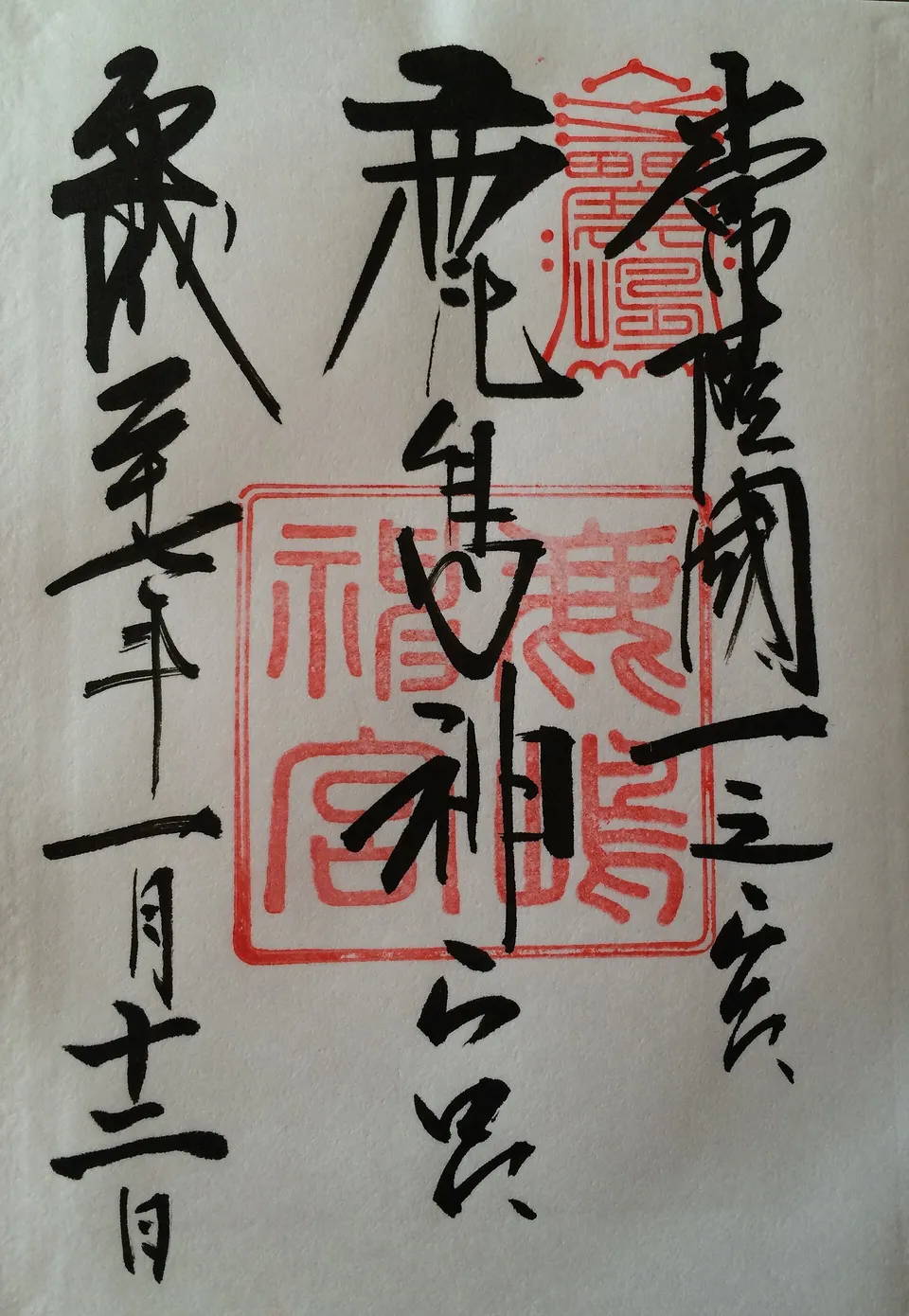
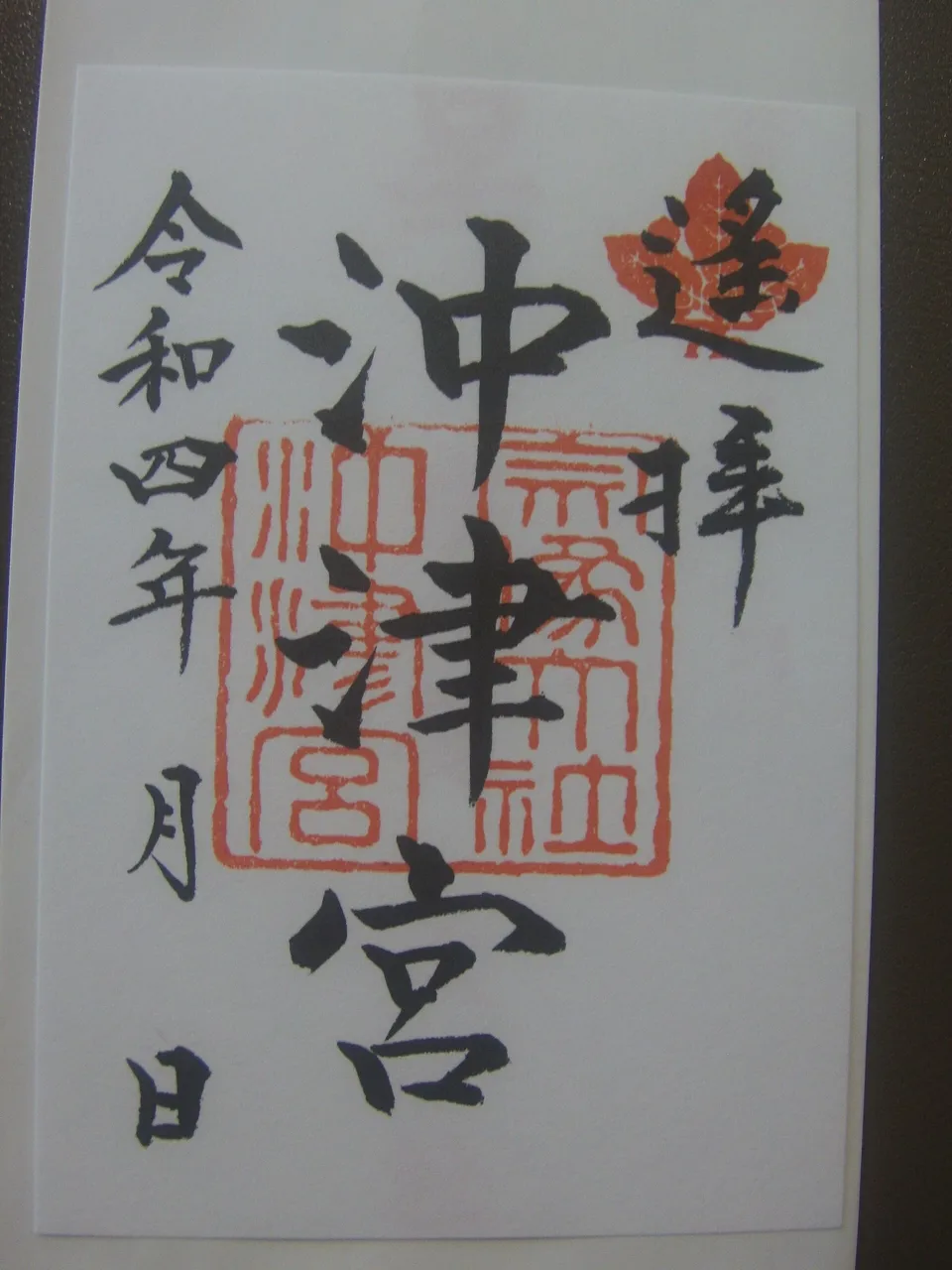
Photos: A goshuin from Kashima Jingū: brushed calligraphy over the shrine's vermilion seals — Alpharigid, CC BY-SA 4.0, via Wikimedia Commons · Goshuin of Munakata Taisha's Okitsu-gū — Indiana jo, CC BY-SA 4.0, via Wikimedia Commons
What matters most is what a goshuin means. It is received at a Shinto shrine or a Buddhist temple as a record and proof of your visit and worship — historically tied to the act of offering a copied sutra or prayer. It is treated as a sacred object, not a collectible knick-knack. You'll sometimes see foreign-language guides frame goshuin-collecting as a "stamp rally," but that framing misses the point and can read as disrespectful: the seal follows worship, it doesn't replace it. Anyone can receive one regardless of nationality or religion, as long as you visit in that spirit and pay your respects first.
The goshuincho book
You collect goshuin in a goshuincho (御朱印帳), a book made of one long sheet folded accordion-style so it opens out into a continuous strip of thick paper. Each opening holds one goshuin, brushed straight onto the page. Many shrines and temples sell their own beautifully designed goshuincho, so the book itself becomes a keepsake of where you've been.
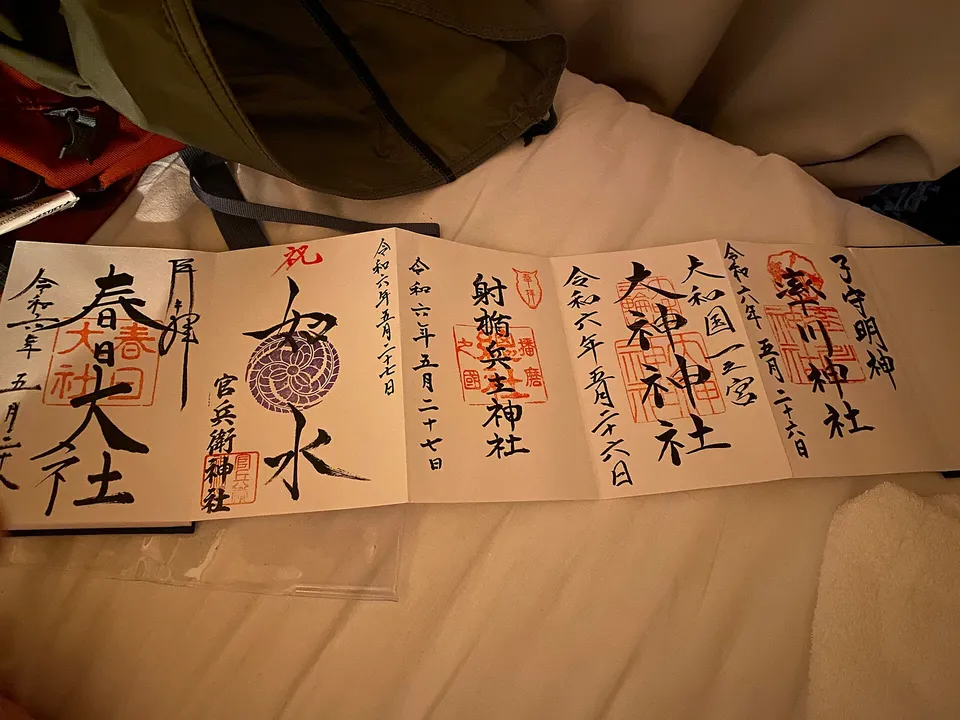
One quiet rule of courtesy: reserve the goshuincho for goshuin only. It isn't a general notebook or autograph book — using it for travel stamps, sketches, or other writing is considered disrespectful to the sacred records it holds. If you want to collect ordinary tourist or station stamps too, carry a separate notebook for those.
Buying your first book at a shrine is a lovely way to start, but if you'd rather land prepared, the Btale accordion-fold goshuincho is a handmade-in-Japan option that ships overseas. We compare it with other books in our goshuincho & stamp notebook guide.
The "Check price" link is an affiliate link (Amazon). We may earn a small commission at no extra cost to you, and it never changes what we recommend. As an Amazon Associate, NihongoHub earns from qualifying purchases.
How to receive one respectfully
Receiving a goshuin is simple once you know the order — and the order matters, because worship comes before the seal. Here is the usual flow.
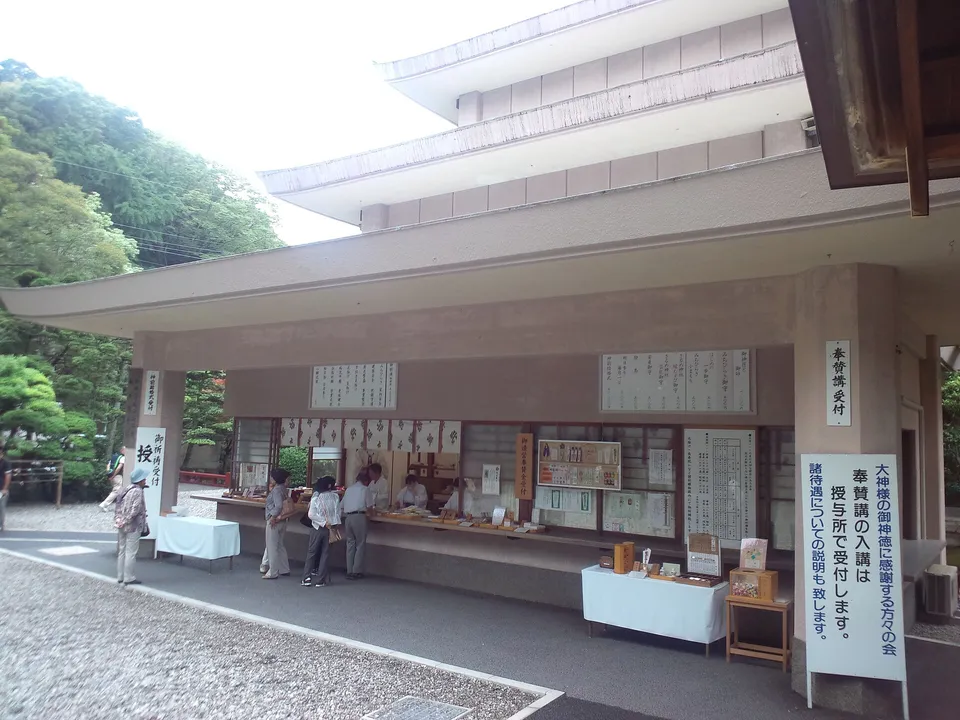
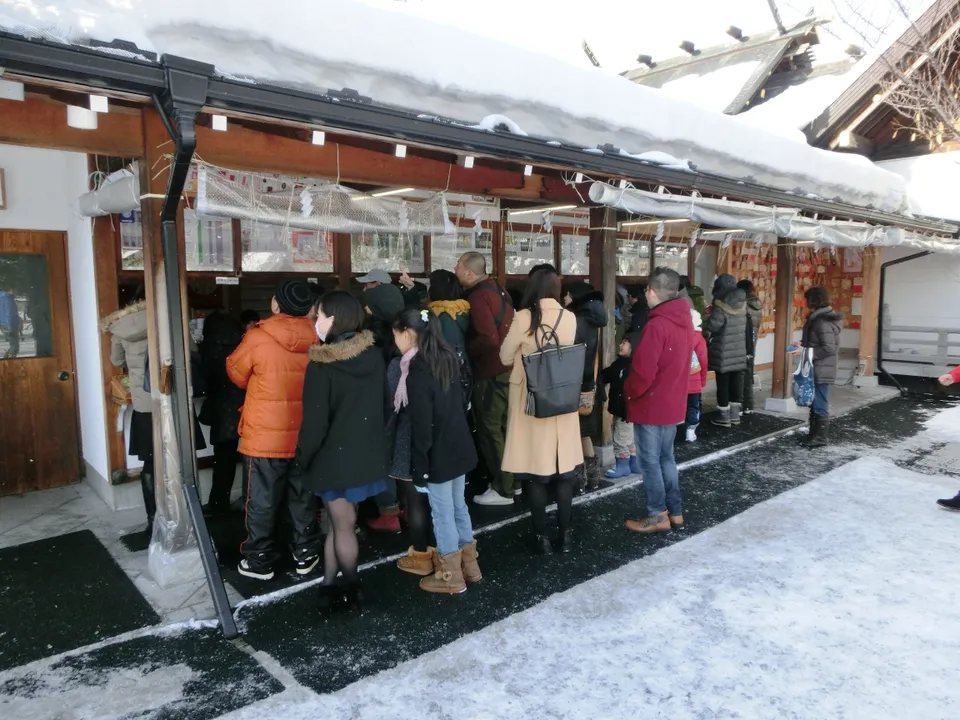
Photos: The juyosho (shrine office) at Sarutahiko Shrine, Ise — where you ask — Yanajin33, CC BY-SA 4.0, via Wikimedia Commons · Waiting at a shrine office window — 田頭寛, CC BY-SA 4.0, via Wikimedia Commons
| # | Step | What to do |
|---|---|---|
| 1 | Bring or buy a goshuincho | Carry your own book, or buy one at the shrine/temple — many sell their own designs (~¥1,500–3,000). |
| 2 | Prepare cash, ideally exact change | The offering is typically ~¥300–500. Most places take cash only and appreciate exact change. |
| 3 | Worship first at the main hall | Pay your respects properly at the main hall before requesting a goshuin. This step is the whole reason the seal exists. |
| 4 | Go to the counter | Find the office: at shrines the 授与所 (juyosho) or 社務所 (shamusho), usually near where omamori charms are sold. |
| 5 | Open the book and hand it over | Open your goshuincho to a clean page, hand it over open, and say "Goshuin o onegaishimasu." |
| 6 | Wait quietly while it's written | The writer brushes it by hand — stay quiet and don't crowd or film them without asking. |
| 7 | Offer the fee and receive it respectfully | Pay the offering and take your book back with both hands and a small bow. At busy times you may get a numbered tag, or a pre-written paper goshuin (書き置き / kakioki) instead. |
The etiquette that matters
Shrines and temples are places of faith first and photo stops second. The etiquette below is what keeps goshuin a welcome practice for visitors — and what separates respectful collecting from treating sacred sites as a points game.
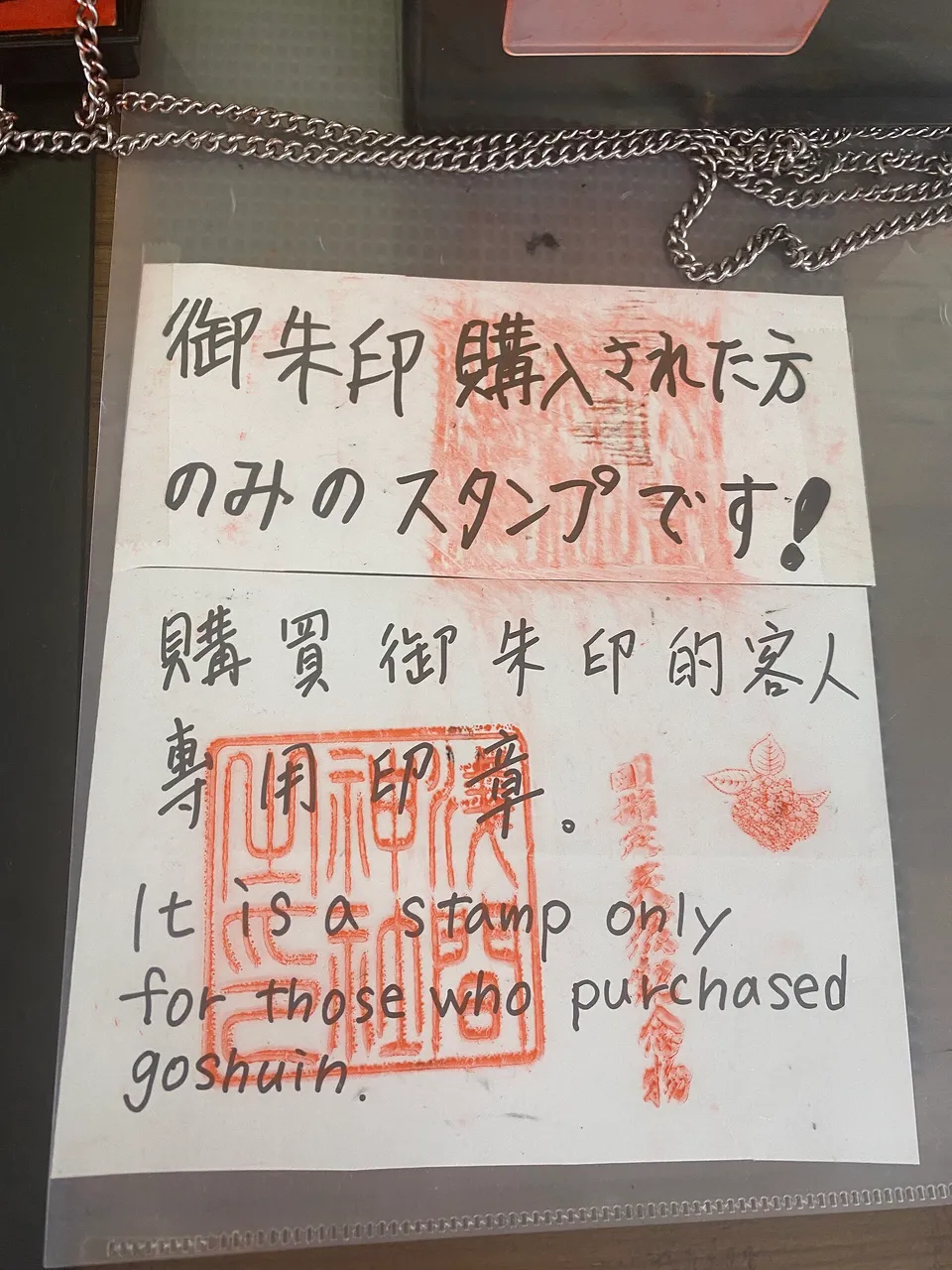
- Pray first. Pay your respects at the main hall before going to the counter. The goshuin is a record of worship, so don't skip the worship.
- Bring cash, ideally exact change. Most counters are cash-only and the offering is typically ~¥300–500. Fumbling for change at a busy window holds everyone up.
- Stay quiet while it's brushed. The writer is concentrating on calligraphy made just for you — keep your voice down and don't lean over the desk.
- Ask before photographing the writer. Filming hands at work without permission is intrusive; a quiet "shashin ii desu ka?" goes a long way.
- Reserve the book for goshuin only. A goshuincho is not a general notebook — keep travel stamps and sketches in something else.
- Treat the separate-book idea as courtesy, not law. Both shrines and temples offer goshuin and there's no universal rule forcing separate books. Many collectors keep one for shrines and one for temples, and a few temples prefer not to mix — but it's a common courtesy, not an absolute prohibition.
One more practical note: a goshuin isn't guaranteed to be available at any given moment. During ceremonies, festivals, or simply when the office is short-staffed, a place may pause hand-writing and offer only a pre-written kakioki (書き置き) paper, or none at all. That's normal — receive whatever is offered graciously.
Japan's national tourism organization (JNTO) keeps a clear, respectful explainer on collecting goshuin at shrines and temples — including how the practice works and how to approach it courteously. Use it as the authoritative reference, then come back here for the step-by-step and the Japanese phrases.
Famous spots for goshuin

Almost any shrine or temple with an office can offer a goshuin, so you don't need a special list — but these well-known sites are easy first stops, each with its own design. (The places themselves are major and easy to find; "beautiful goshuin" framing is softer, since designs rotate and limited editions come and go.)
| Place | City · Prefecture | Region | Why notable | Free guide |
|---|---|---|---|---|
| Sensōji浅草寺 | Asakusa, Tokyo | Kanto | Tokyo's oldest and most iconic temple — a classic first goshuin | Tokyo → |
| Meiji Jingū明治神宮 | Shibuya, Tokyo | Kanto | Major forested Shinto shrine; a popular first goshuin in the capital | Tokyo → |
| Kawagoe Hikawa Shrine川越氷川神社 | Kawagoe, Saitama | Kanto | Known for colourful seasonal and limited goshuin | Saitama → |
| Tsurugaoka Hachimangū鶴岡八幡宮 | Kamakura, Kanagawa | Kanto | Historic shrine at the heart of Kamakura sightseeing | Kanagawa → |
| Hase-dera長谷寺 | Kamakura, Kanagawa | Kanto | Scenic temple with a giant Kannon, a short walk from the Great Buddha | Kanagawa → |
| Kiyomizu-dera清水寺 | Kyoto, Kyoto | Kansai | UNESCO World Heritage temple; one of Japan's most-visited goshuin spots | Kyoto → |
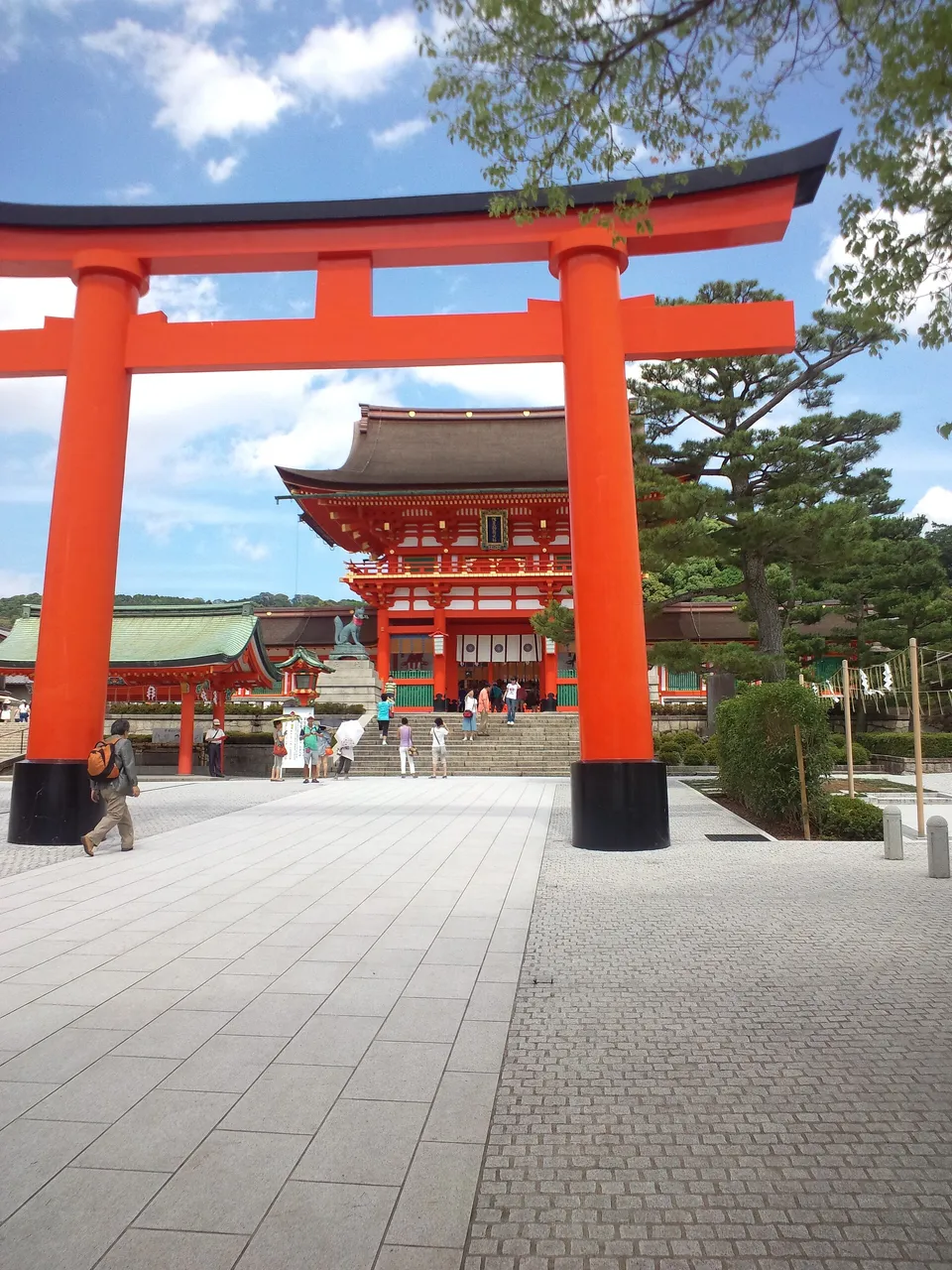
| Fushimi Inari Taisha伏見稲荷大社 | Kyoto, Kyoto | Kansai | The shrine of a thousand vermillion torii gates | Kyoto → |
| Yasaka Jinja八坂神社 | Kyoto, Kyoto | Kansai | Central Gion shrine, easy to fold into a Higashiyama walk | Kyoto → |
Don't assume a goshuin is always on offer at any named place: during ceremonies or busy festival days a site may pause hand-writing or give only a pre-written kakioki paper. Check at the counter on the day, and treat whatever you receive as the record of that visit.
Limited & seasonal goshuin, and the "goshuin girls"
Beyond the standard design, many shrines and temples issue limited or seasonal goshuin (限定 / gentei) — special editions tied to New Year, festivals, cherry-blossom season, or autumn leaves. These are highly collectible, sometimes more elaborate and a little more expensive, and they're a big reason people return to the same site across the year.
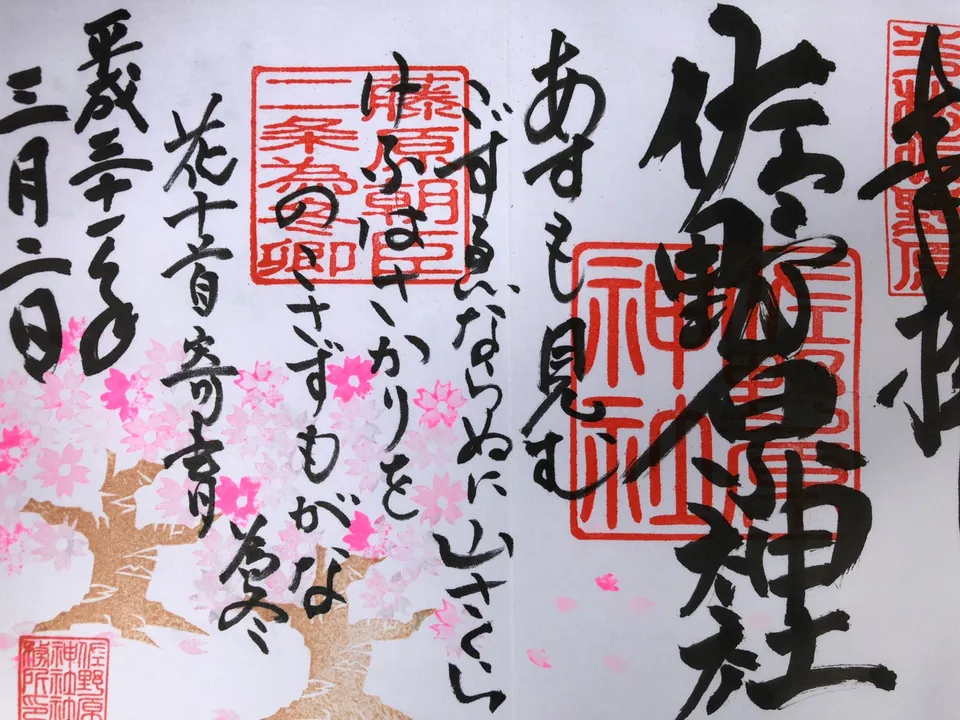
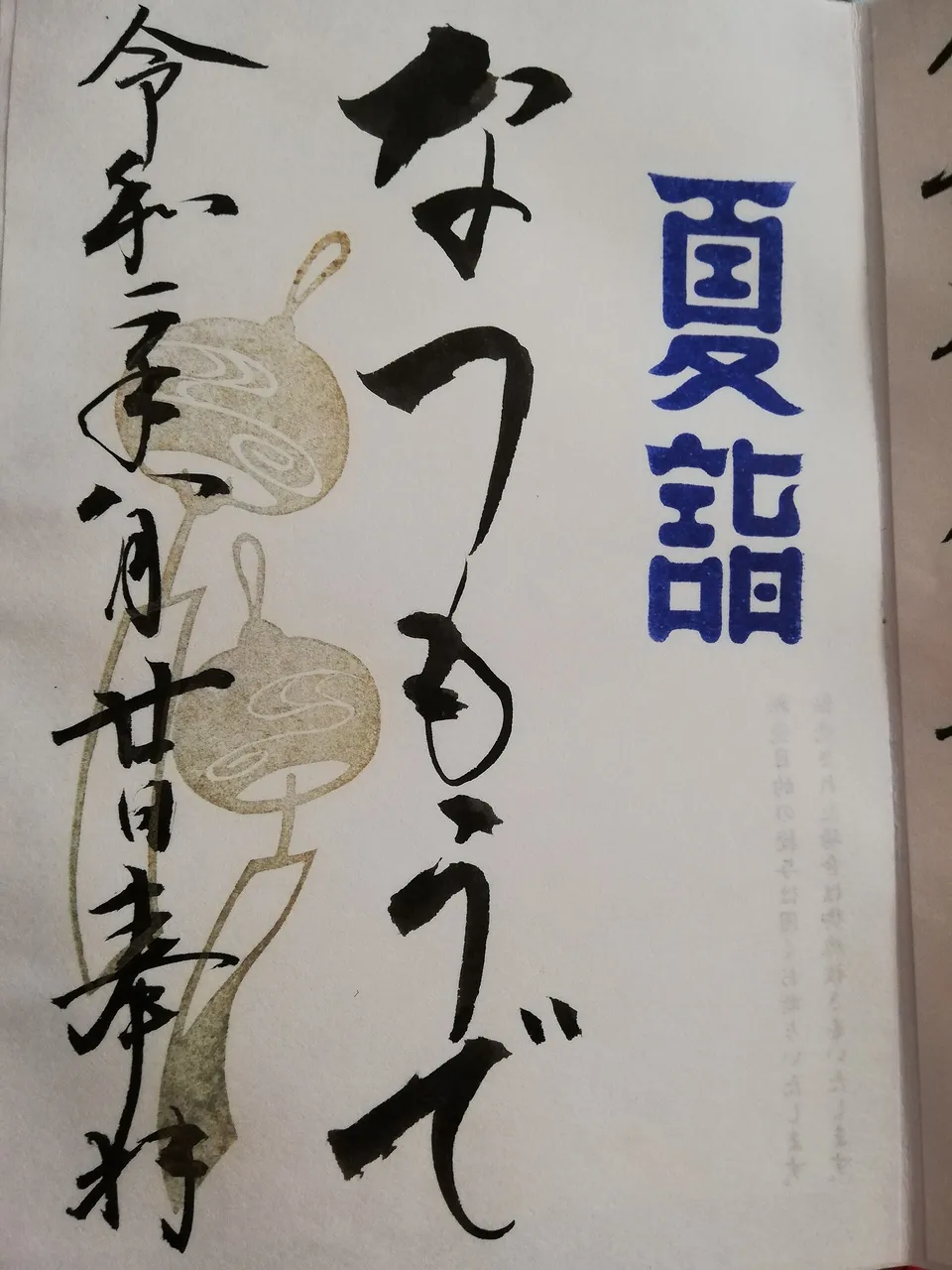
Photos: A seasonal, colour-printed goshuin — 里司, CC BY-SA 4.0, via Wikimedia Commons · A limited goshuin from Ishiura Shrine, Kanazawa — 先従隗始, CC BY-SA 4.0, via Wikimedia Commons
Over the past decade goshuin-collecting has also become a visible hobby among younger visitors — sometimes called goshuin girls (御朱印ガール) — who share their books and seasonal designs on social media. We'd treat the trend framing as medium-confidence rather than a hard statistic, but it does capture something real: the practice has broadened well beyond older pilgrims, and seasonal designs travel fast online. Even so, the etiquette doesn't change with the audience — pray first, and treat the seal as a record of worship, not content for content's sake.
Some links above are affiliate links. We may earn a commission at no extra cost to you. We only list services we'd use ourselves.
The Japanese you'll actually use
A few words at the counter make the whole exchange smoother — and signal that you understand what a goshuin is.
| Japanese | Reading | Meaning |
|---|---|---|
| 御朱印 | goshuin | the hand-brushed seal — a record of your visit and worship |
| 御朱印帳 | goshuincho | the accordion-fold book you collect goshuin in |
| 神社 | jinja | a Shinto shrine |
| お寺 | otera | a Buddhist temple |
| 参拝 | sanpai | worship / paying your respects — the step that comes first |
| 授与所 | juyosho | the counter where goshuin and charms are given out |
| 初穂料 | hatsuhoryo | the customary offering for the goshuin (a respectful term — you may also just see a price posted) |
| 書き置き | kakioki | a pre-written paper goshuin, given when hand-writing isn't possible |
| 限定 | gentei | "limited" — a special seasonal or event-only goshuin |
Want these to stick? The free JLPT battle quiz drills travel and culture vocabulary like this with spaced repetition.
Goshuin chains naturally with other place-based hunts: 100 Castles & their gojoin castle stamps → (the castle equivalent of a goshuin), anime pilgrimage (seichi junrei) →, and Pokéfuta (Pokémon manhole covers) →. Many travellers fold a few of these into the same prefecture.
Seasonal designs are their own hunt: autumn maple goshuin →, cut-paper kirie goshuin →, and in the first week of January, the Seven Lucky Gods seven-stamp sheet →.
Common questions
Q. What is a goshuin?
A. A goshuin (御朱印, "honorable red seal") is an original, hand-brushed seal you receive at a Shinto shrine or Buddhist temple as a record and proof of your visit and worship. It combines red ink stamps — the place's name and emblem — with handwritten black calligraphy of the name and the date you visited. It is treated as sacred, not as a souvenir.
Q. How much does a goshuin cost?
A. The offering is typically around ¥300–500, occasionally up to about ¥1,000, with limited or seasonal designs costing more. Most places take cash only and appreciate exact change. Treat it as an offering rather than a fixed price, and check what's posted at the counter.
Q. Can foreign visitors get a goshuin?
A. Yes. Anyone can receive one regardless of nationality or religion, as long as you visit respectfully and pay your respects at the main hall first.
Q. Where do I buy a goshuincho?
A. Many shrines and temples sell their own goshuincho at the counter (the juyosho or shamusho), often with their own designs, typically around ¥1,500–3,000. You can also buy one in advance at stationery shops or larger temples and bring it along.
Q. How do I ask for a goshuin?
A. Worship at the main hall first, then go to the counter, open your goshuincho to a clean page, hand it over open, and say "Goshuin o onegaishimasu." Wait quietly while it's brushed, then offer the fee and receive the book with both hands.
Q. Is it OK to mix shrine and temple goshuin in one book?
A. There's no universal rule forcing separate books — both shrines and temples offer goshuin. Many collectors do keep one book for shrines and one for temples as a courtesy, and a few temples prefer not to mix, but this is a common practice, not an absolute prohibition.
Q. Why are goshuin more than souvenirs?
A. A goshuin is a sacred record of worship, historically linked to offering a copied sutra or prayer at a temple or shrine. The seal follows the act of paying your respects — it doesn't replace it — which is why it's considered disrespectful to treat goshuin-collecting as a stamp rally or to skip worship.
Plenty of temples hand you a bowl of matcha and a sweet while your goshuin is being written. To repeat that at home you need a wide bowl, a bamboo whisk and a scoop — a seven-piece set brings all of it, including the stand that keeps the whisk in shape, so nothing arrives half-finished.
The "Check price" link is an affiliate link (Amazon). We may earn a small commission at no extra cost to you, and it never changes what we recommend. As an Amazon Associate, NihongoHub earns from qualifying purchases.
Want to compare sets first? Our matcha and tea ceremony set comparison → covers which whisk sets include a bowl, which don't, and what to buy first.
We're a Japanese family of three traveling all 47 prefectures with our kid, and this guide comes from that road. Our free newsletter 47 Notes from Japan shares the travel notes, collectible finds, and real-life Japanese that don't fit in a guide. No spam, unsubscribe anytime.