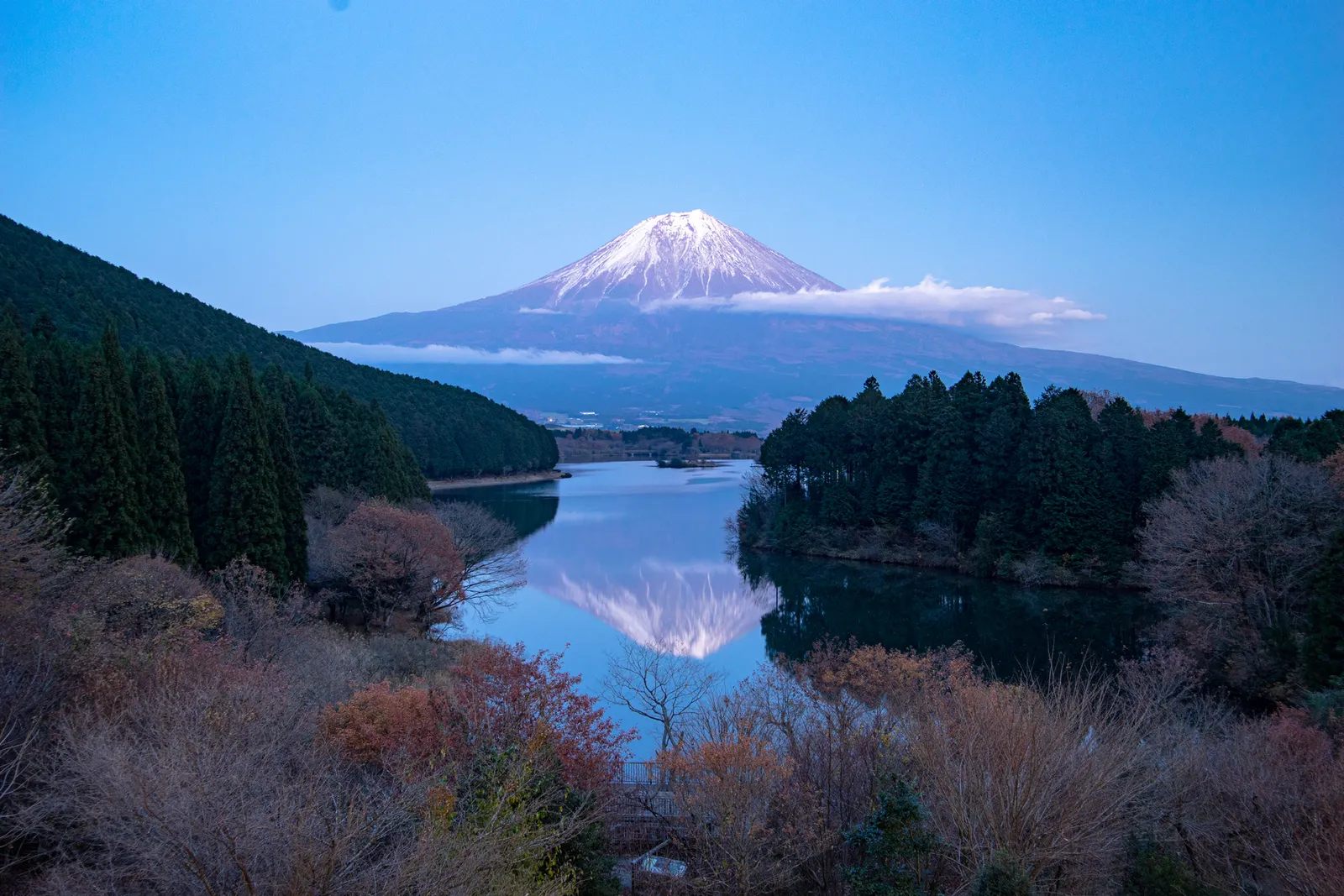
Shizuoka is famed for sweeping views of Mount Fuji and produces a large share of Japan's green tea, while its Izu Peninsula draws visitors to coastal hot springs and fresh seafood.
Shizuoka (静岡) was where Tokugawa Ieyasu spent his final years at Sunpu Castle (駿府城). Mild and sunny, its hillsides became Japan's green-tea heartland.
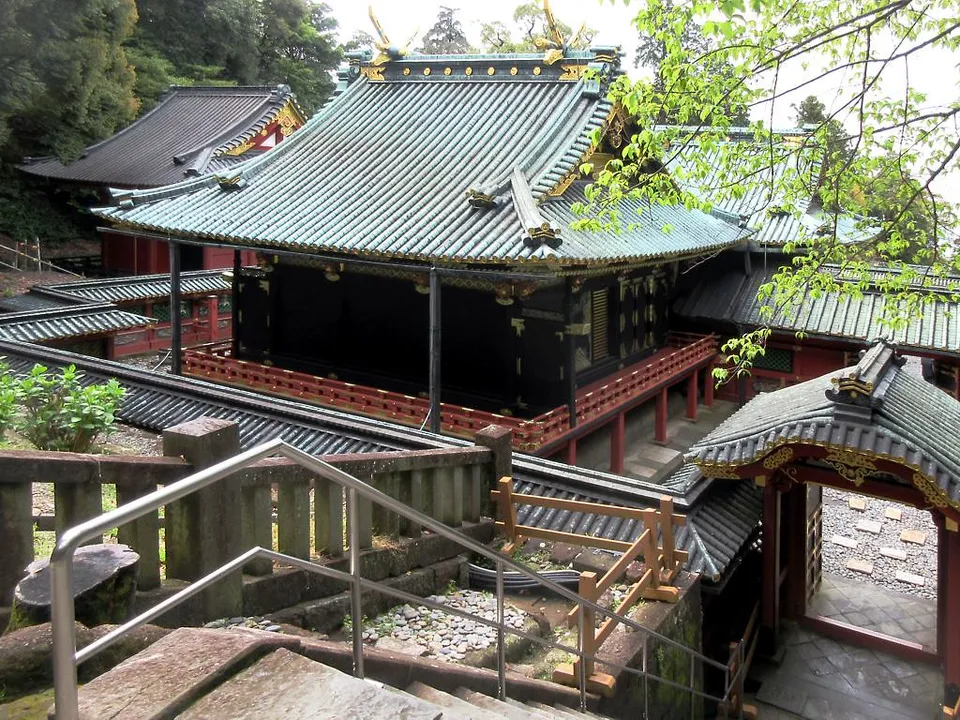
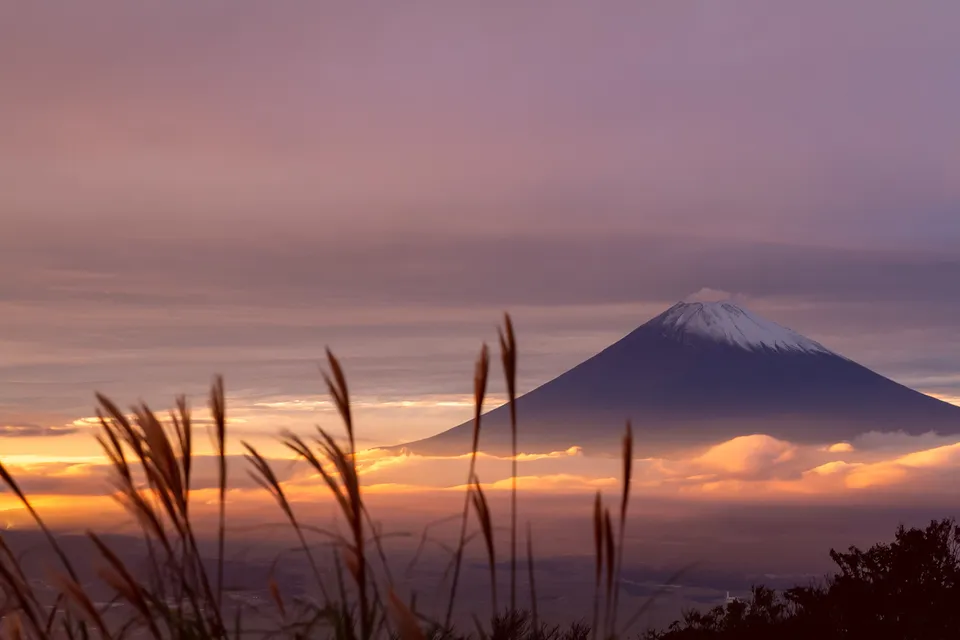
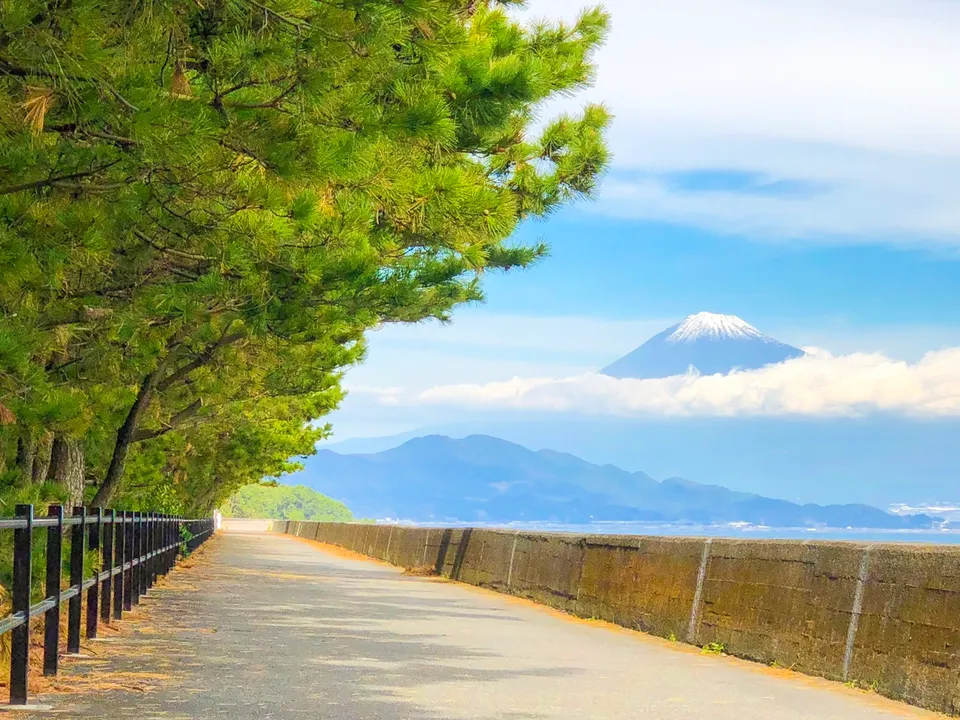
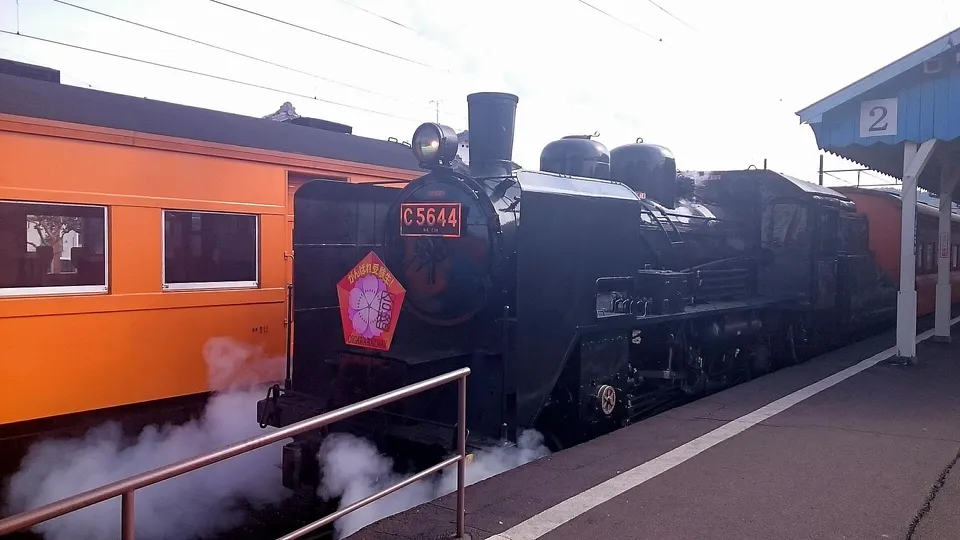
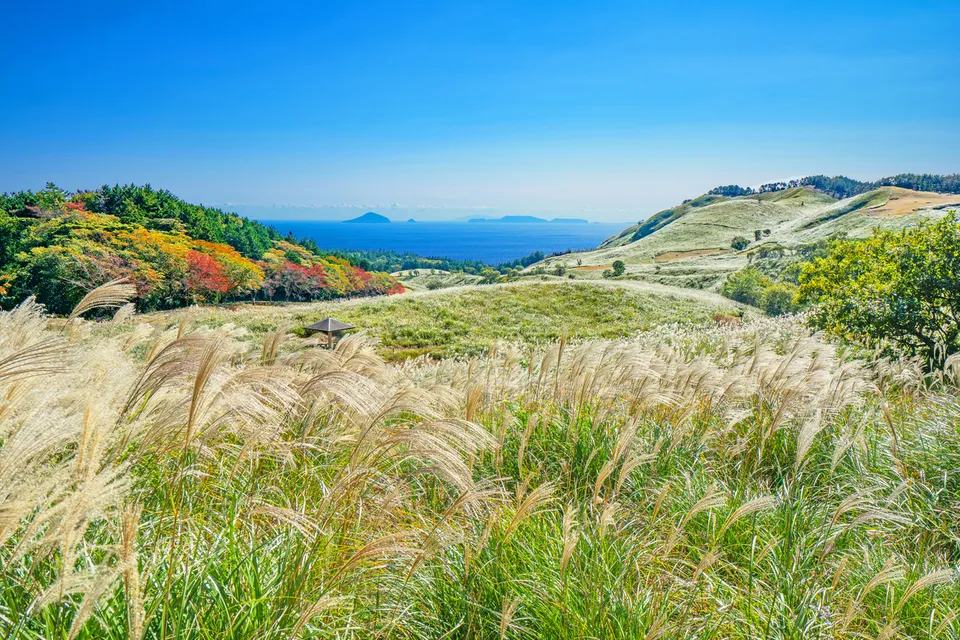
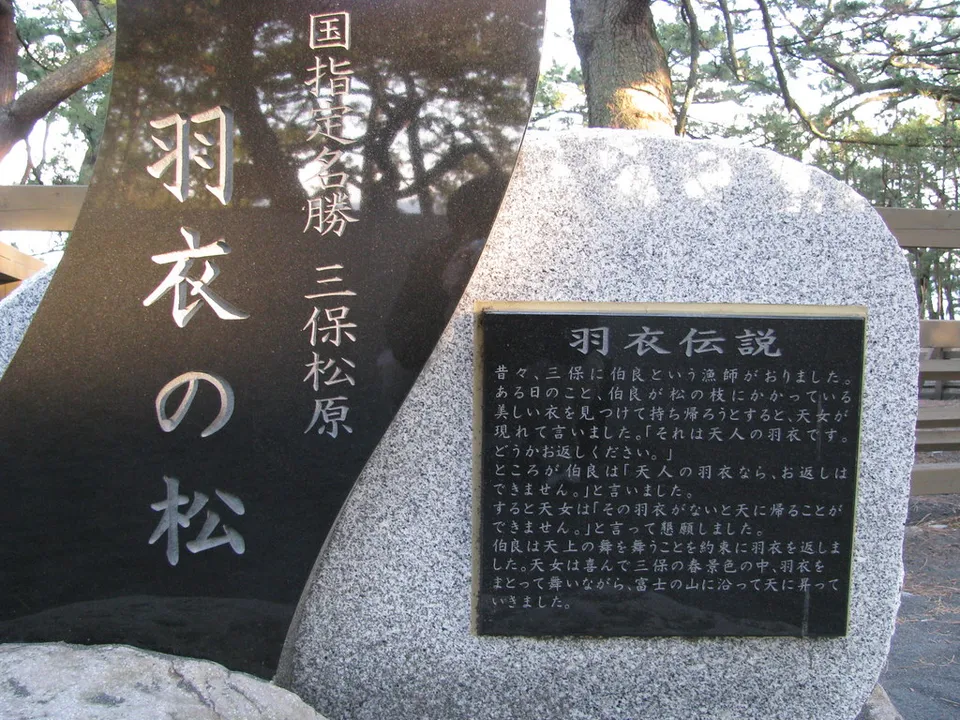
Photos: Kunozan Toshogu Shrine — D-Stanley via Flickr, CC BY 2.0 · Mount Fuji — m_someya via FIND/47, CC BY 4.0 · Miho no Matsubara — Otaki_Kohta_photo via FIND/47, CC BY 4.0 · Oigawa Railway steam locomotive — Kounoichi via Wikimedia Commons, CC BY-SA 4.0 · Ikadaba wasabi fields — SQUAREZERO via FIND/47, CC BY 4.0
Shizuoka City is ~1h from Tokyo by Tōkaidō Shinkansen.

Shizuoka green tea (cha / matcha)
Shizuoka produces roughly 40% of all Japanese green tea, the single largest output of any prefecture; pristine slopes and water make for high-quality leaves.
Wasabi (Shizuoka water-grown wasabi)
Shizuoka is the birthplace of cultivated wasabi (Utogi); its traditional tatamiishi water-cultivation method is a UN-recognized Globally Important…
 Local secret
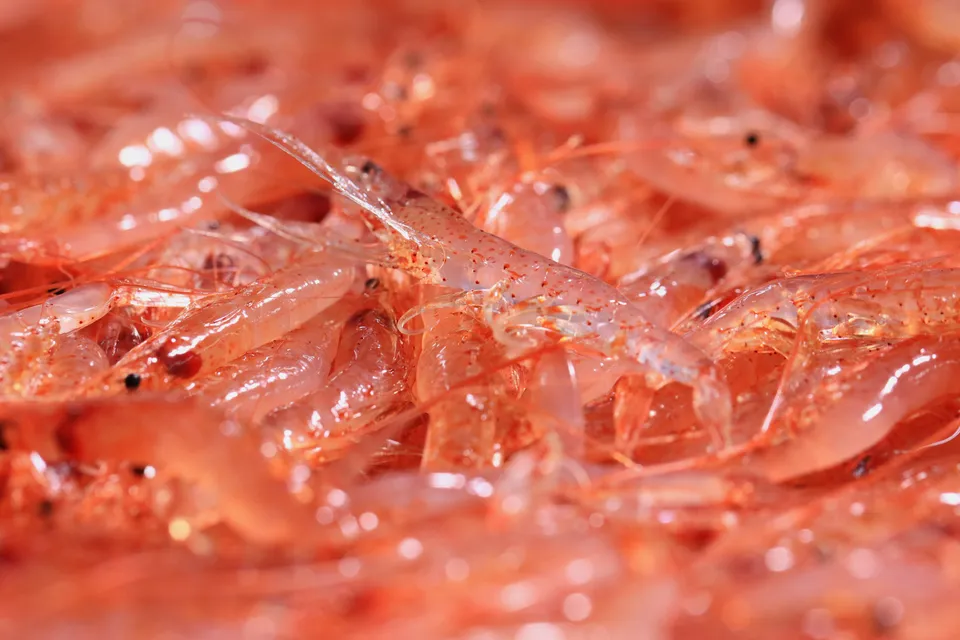
Sakura ebi (cherry shrimp) bowls & kakiage
Caught at only two harbors on Earth, both in Shizuoka (Yui and Oigawa), and only in limited seasons; eaten raw on rice, as kakiage tempura, or in the local…
Shizuoka at a glance
Next door
Links marked PR are affiliate links: if you book through them we may earn a commission at no extra cost to you. Photos: Mount Fuji views — AnthonyKwok via FIND/47, CC BY 4.0 · Kunozan Toshogu Shrine — D-Stanley via Flickr, CC BY 2.0 · Mount Fuji — m_someya via FIND/47, CC BY 4.0 · Miho no Matsubara — Otaki_Kohta_photo via FIND/47, CC BY 4.0 · Oigawa Railway steam locomotive — Kounoichi via Wikimedia Commons, CC BY-SA 4.0 · Ikadaba wasabi fields — SQUAREZERO via FIND/47, CC BY 4.0 · Miho no Matsubara — Masaharu Fujikawa (藤川正治) via Flickr, CC BY 2.0 · Sakura ebi — AyaKatase via FIND/47, CC BY 4.0. Map: Geolonia (MIT).