Japanese tea regions worth visiting — and what to bring home
Two things about Japanese tea changed recently and most English-language guides have not caught up. Kagoshima now out-produces Shizuoka — the ranking every article still states backwards. And in the 2025 national competition, every one of the top five tencha scores came from a single town. Those two facts tell you where to go and what to buy better than any "best green tea" list. This guide covers five regions: what each actually grows, what you can visit, when to go, and which tea is worth carrying home. If you came from our knife towns guide, this is the same idea applied to a different craft — the thing you like, and the place it comes from.
Three things that decide which region you want
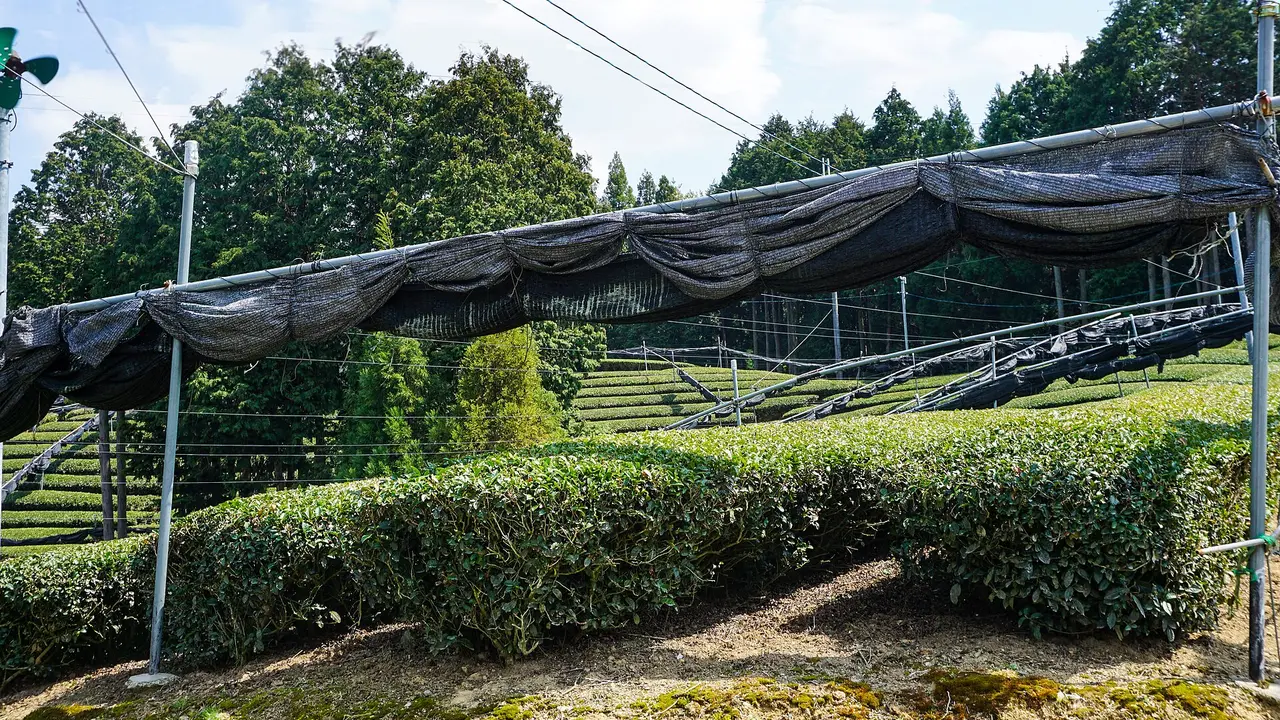
1. Shaded or unshaded? This is the fundamental split. Leaves grown in full sun become sencha — brisk, grassy, the everyday tea. Leaves shaded for weeks before picking build up amino acids instead of catechins, and become gyokuro (steeped) or tencha, which is stone-ground into matcha. Shading is labour, so shaded tea is a specialism: Uji and Yame are shade country, Shizuoka and Kagoshima are largely sun country.
2. Do you want the famous tea, or the good tea? These are not always the same region any more. Uji is the prestige name in matcha, and the 2025 competition backs it. But Kagoshima has quietly become Japan's largest producer of tencha, the matcha raw material — which means a lot of what you drink as "matcha" now begins in Kyushu regardless of where it is ground and boxed.
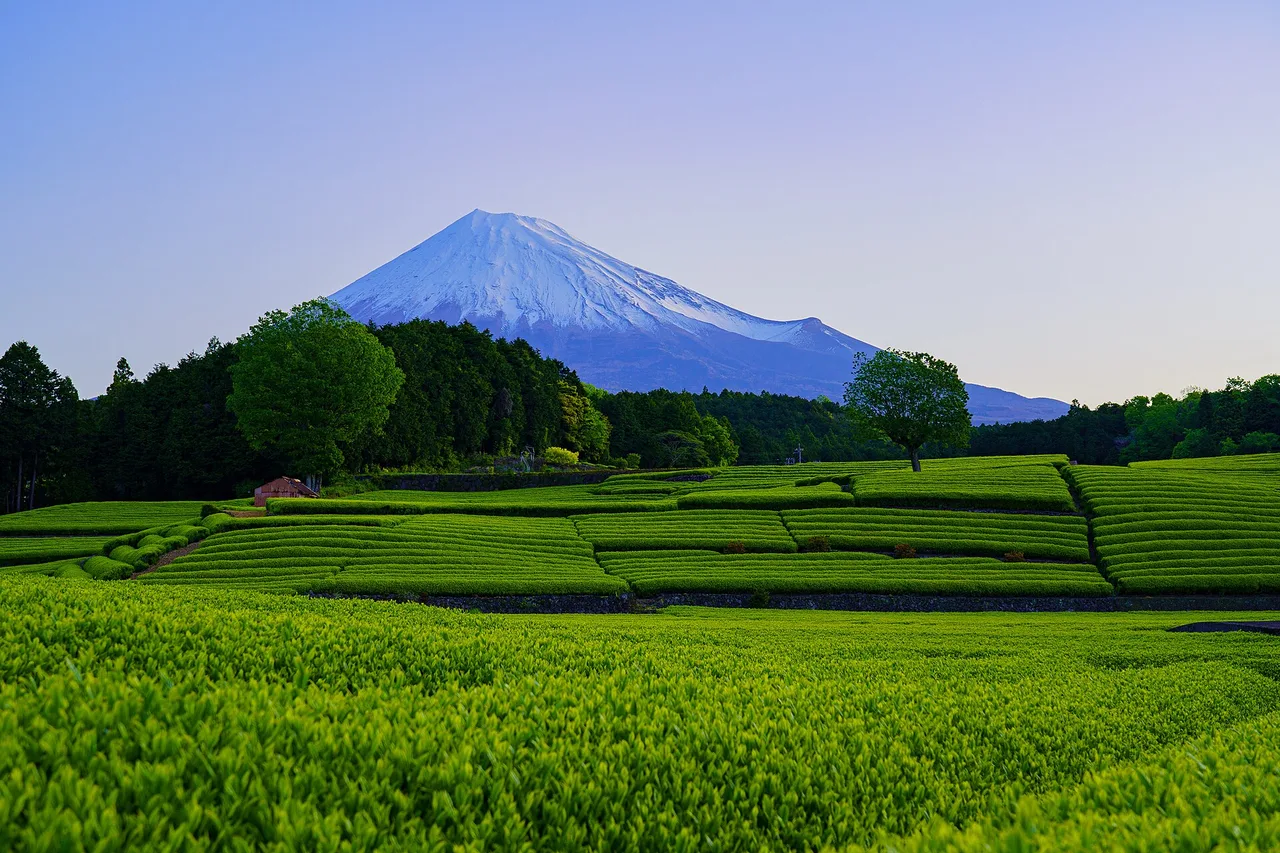
3. Are you visiting a landscape or a workshop? Shizuoka gives you tea terraces under Mount Fuji. Uji gives you a stone mill you can turn yourself, ten minutes from a UNESCO temple. Chiran gives you tea hedges around samurai gardens. Sayama gives you a half-day from Tokyo. Pick the experience, not the brand.
The numbers, as of 2025
Japan's tea area is about 33,400 hectares, producing roughly 75,100 tonnes of aracha (unrefined raw tea) in FY2025. Shizuoka, Kagoshima and Mie together hold roughly 70% of the planted area. The headline change is at the top.
| Measure | Kagoshima | Shizuoka | Note |
|---|---|---|---|
| Aracha production, FY2025 | 30,000 t | 24,100 t | Kagoshima ahead for a second consecutive year (FY2024 and FY2025) |
| First-flush (ichibancha), 2025 | 8,440 t | 8,120 t | Shizuoka down about 19% year on year; Kagoshima roughly flat |
| Tencha (matcha raw leaf) | 1st | 3rd | Kyoto sits 2nd. National tencha output reached 5,336 t in FY2024 |
Figures as reported from MAFF statistics. Mie, the third-largest prefecture by area, produced 1,940 t of first-flush crude tea in 2025, down about 8% year on year. Two cautions: aracha volume is not the same as quality or as finished-tea value, and a prefecture can lead on tonnage while another leads on price per kilo. Volume rankings and competition rankings measure different things — this guide keeps them separate on purpose.
The five regions, honestly
Uji, Kyoto — the matcha that wins the competition
In the 79th National Tea Competition (2025), first place in the tencha category went to Uji City, second to Jōyō City in the same prefecture, third to Nishio in Aichi — and all five of the top five individual scores came from Uji. One grower, Yoshitsugu Furukawa of Gokashō in Uji, took first with a perfect 200 out of 200 and second with 199. Whatever you think of competition tea, that is not a marketing claim; it is a scoreboard.
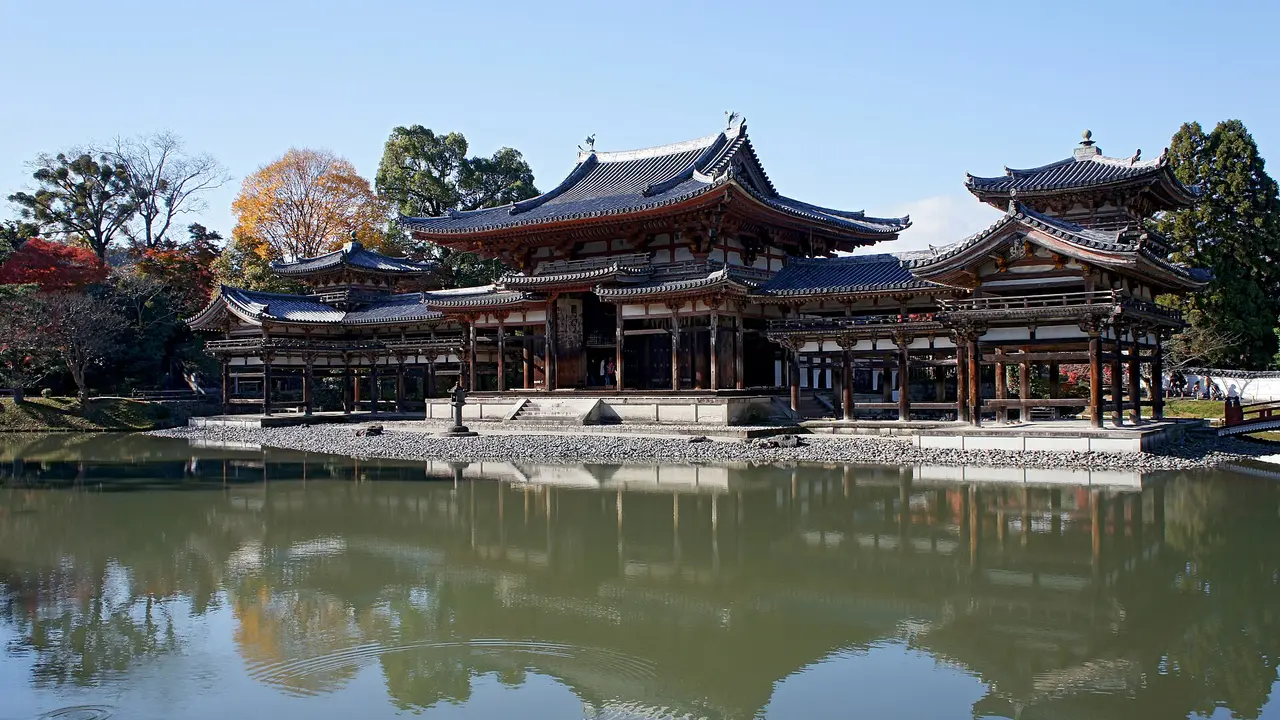
What you can do there is unusually hands-on for a prestige region. Fukujuen Ujicha Kōbō, on the north bank of the Uji River, runs stone-mill matcha grinding — you grind tencha into powder yourself, then drink what you made — plus sencha and matcha etiquette sessions. It is 5–10 minutes from Byōdō-in and about 15 minutes from JR Uji Station, open roughly 10:00–15:00 (last admission) with sessions around 30 minutes; reservations get priority but are not required. There is also Chazuna, a tea museum and park in Uji with hands-on exhibits.
✔ The only region where the prestige claim, the competition result and a walk-in workshop all line up — and it is a half-hour from Kyoto Station.
✘ Uji is crowded, and "Uji matcha" on a package is a regional label, not a guarantee that the leaf was grown in Uji city limits. Prestige pricing is real here.
Best for: matcha, and for anyone who wants to grind their own. Pair it with Byōdō-in and the Kyoto guide (5/5 for culture in NihongoHub's 47-prefecture dataset).
Yame, Fukuoka — gyokuro, and a 25-year streak
Yame has taken the Production Area Prize in the gyokuro category of the National Tea Competition for twenty-five consecutive years, 2001 to 2025. It also won the top individual prize for twelve straight years from 2001 until a grower from Uji broke the run in 2013. If you want the shaded, sweet, low-astringency style — gyokuro brewed at around 50–60°C, a tiny volume, almost broth-like — this is the source region.
Yame's technique is honzu: shading the bushes with straw and reed screens rather than modern black netting, and controlling exactly how long and how densely. It is slower and more expensive, which is the whole point. Sources differ on Yame's share of national gyokuro output — figures around 40% and figures above 50% both circulate, without a common primary citation, so treat it as "most of it" rather than a number.
✔ The clearest single-category dominance in Japanese tea, sustained over a quarter-century of blind judging.
✘ Yame is the least tourist-shaped of the five. It is a farming district in inland Fukuoka, not a sightseeing town, and the best tea leaves as gift boxes rather than staying in cafés.
Best for: gyokuro, and for people who will actually brew it properly. Hakata is the gateway — see the Fukuoka guide.
Shizuoka — the landscape, and the title it just lost
Shizuoka was Japan's largest tea producer for generations and is no longer, by volume: 24,100 t against Kagoshima's 30,000 t in FY2025, the second consecutive year behind. Its first flush fell about 19% year on year in 2025. That is worth knowing before you read another article that opens "Shizuoka, Japan's top tea prefecture."
What has not changed is that Shizuoka is the most photogenic tea region in the country, because the crop and the mountain occupy the same frame. The Fujinokuni Tea Museum in Shimada City sits on the Makinohara plateau, Japan's largest single tea-growing area: open 09:00–17:00 (last admission 16:30), closed Tuesdays and New Year, admission ¥300, with a Japanese garden, a tea ceremony house, and tea-picking sessions. From JR Kanaya Station take a bus to Nikenyabara, three minutes' walk.
✔ Tea terraces with Mount Fuji behind them, a cheap prefectural museum, and the shortest hop from Tokyo of any region here — about 60 minutes.
✘ The volume story is now a decline story, and the region is spread across a wide plateau; without a car you are dependent on local buses.
Best for: a first tea trip, and for sencha. See the Shizuoka guide — 5/5 for nature in our dataset, the highest of these five.
Chiran, Kagoshima — the new number one, with samurai gardens
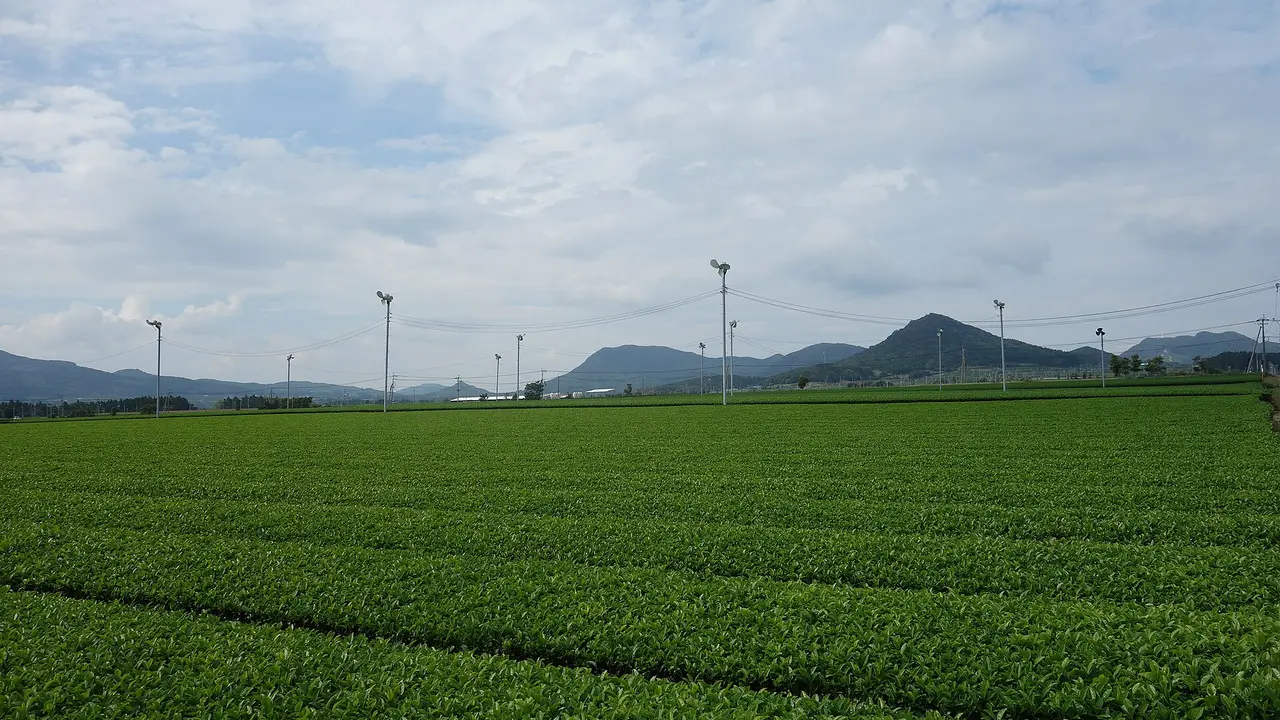
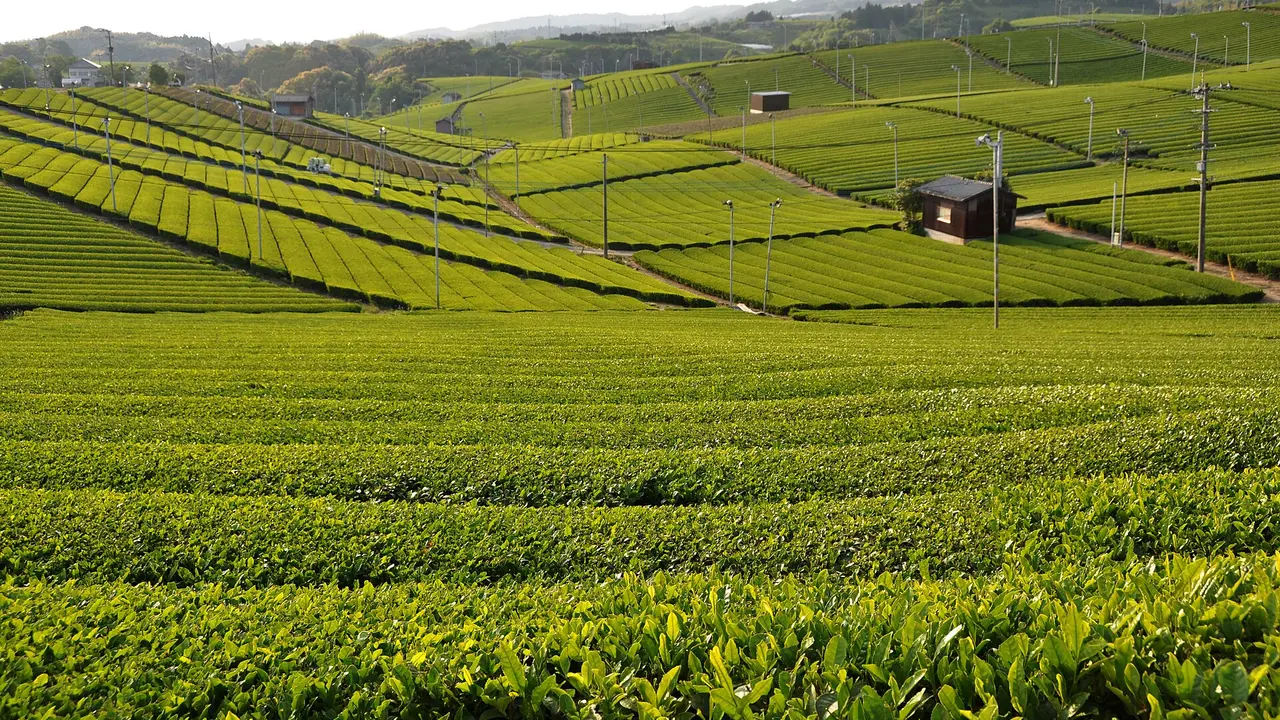
Kagoshima's rise is recent and industrial: flatter land, earlier harvests, more mechanisation, and now the top spot in both total aracha and tencha. Chiran, in Minamikyūshū City, is where that story is most visible to a visitor. Tea fields were planted here from 1872, a tea factory was built in 1934, and tea from it was presented to the Emperor in 1938.
The reason to come, though, is that Chiran's samurai residence gardens — a nationally designated Preservation District for Groups of Traditional Buildings, with seven gardens open — use hedges that combine podocarpus with tea plants. The town's two identities are literally growing into each other. Farms in the surrounding hills run plantation visits with Mount Kaimon in the background, and you can drink Kagoshima sencha on the veranda of a samurai house with local brown-sugar sweets.
✔ The only region on this list where the tea landscape and a preserved historic townscape are the same walk.
✘ Far. About 395 minutes from Tokyo to Kagoshima-Chūō, then a bus inland — this is a Kyushu trip, not a detour. Kagoshima also scores 1/5 for culture in our dataset, which undersells Chiran but is right about the prefecture overall.
Best for: everyday sencha at good value, and for travellers already going to Kyushu. See the Kagoshima guide.
Sayama, Saitama — the one you can do before dinner
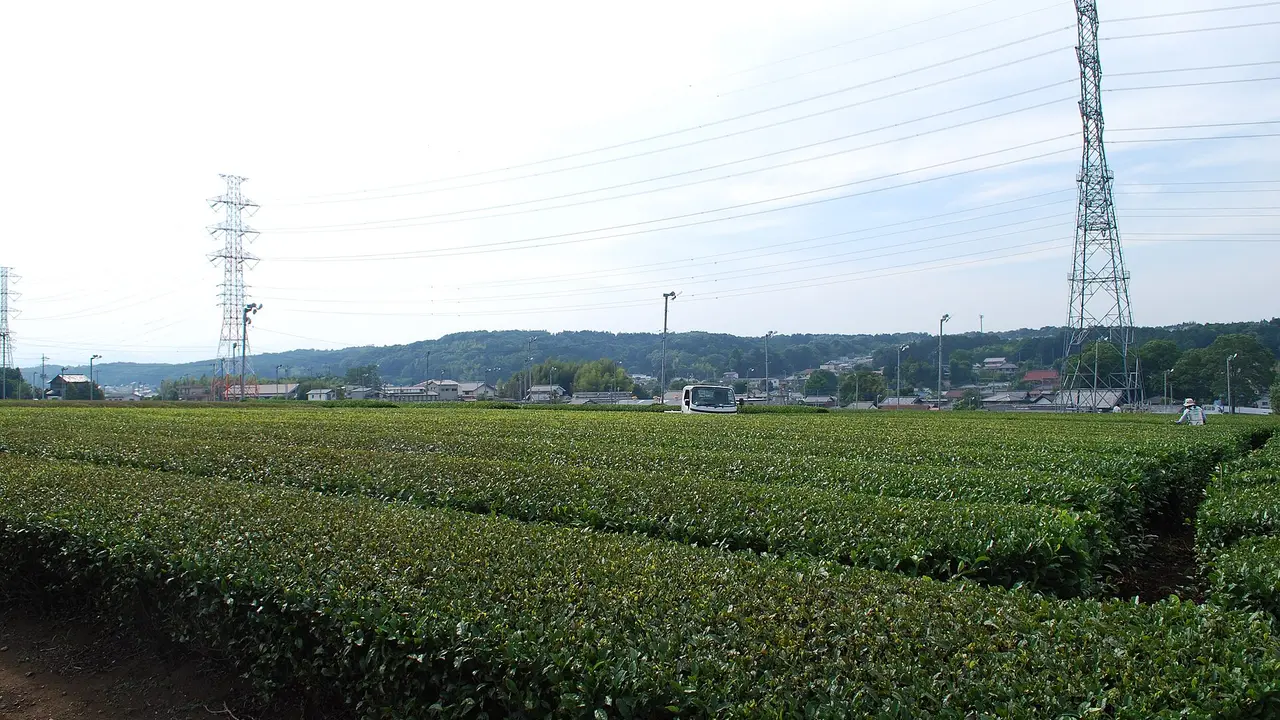
Sayama tea is grown at the cold northern edge of commercial tea cultivation in Japan, across Sayama and Iruma in Saitama. The trademark was registered in 1945. Small volume, thick leaves, and a distinctive finish: Sayama's sencha gets an extra high-temperature firing — Sayama-bi — which gives it a roasted aroma the southern regions do not have. It is the clearest flavour signature of any region here.
Practically, this is the one that fits into a normal Tokyo trip. Iruma City Museum ALIT is built around tea, with tea-rolling and tea-ceremony sessions. Farms in Sayama run leaf-picking between roughly May and October while the leaves are still soft, and some run tōcha — "tea fighting", a medieval guessing game where you taste and identify the tea — in old plantation houses. Ōmiya is about 25 minutes from Tokyo.
✔ A genuine tea region inside a Tokyo day trip, with a flavour you cannot get elsewhere and hands-on sessions that do not require a special journey.
✘ Small scale and low prestige — nobody will be impressed by the box. Saitama scores 1/5 for nature and 1/5 for food in our dataset; go for the tea, not the scenery.
Best for: anyone short on time, and for people who prefer roasted aromas to grassy ones. See the Saitama guide.
Getting there: rail times
Times are to each prefecture's main station. Every region needs a further local leg — a train to Uji, a bus to Nikenyabara, a bus inland to Chiran.
| Region (main station) | From Tokyo | From Kyoto | From Shin-Osaka |
|---|---|---|---|
| Sayama (Ōmiya) | ~25 min | ~160 min | ~165 min |
| Shizuoka (Shizuoka Station) | ~60 min | ~115 min | ~125 min |
| Uji (Kyoto Station) | ~130 min | — | ~15 min |
| Yame (Hakata) | ~300 min | ~170 min | ~150 min |
| Chiran (Kagoshima-Chūō) | ~395 min | ~230 min | ~225 min |
From NihongoHub's rail reachability matrix (approximate, ±20%, fastest services). The nationwide JR Pass does not cover the fastest Tokaido/Sanyo/Kyushu trains, so add 15–25% on those segments. A realistic plan: Sayama or Shizuoka from Tokyo in a day, Uji from Kyoto in a half-day, Yame and Chiran only as part of a Kyushu itinerary.
When to go
Tea has a season and it is short. First flush (ichibancha) runs roughly late April into May, earlier in Kagoshima and later in Saitama, and that is when the fields are bright green and the picking experiences run. Shaded fields for gyokuro and tencha go under cover for several weeks before that harvest, so in April you may find the best plots hidden under screens — visually disappointing, agriculturally the point. Second flush follows in June. Outside those windows the bushes are dark and clipped, the museums are open, and the shops are calm — which some people prefer.
A practical note on freshness. Japanese green tea is a fresh product, not a keeping one. It is usually dated by harvest year, and it fades within months of opening. Buy the amount you will drink in a few weeks, keep it sealed and cold, and do not buy a beautiful tin to open next year.
What to bring home, and what not to
| If you liked… | Buy | Region | Brewing note |
|---|---|---|---|
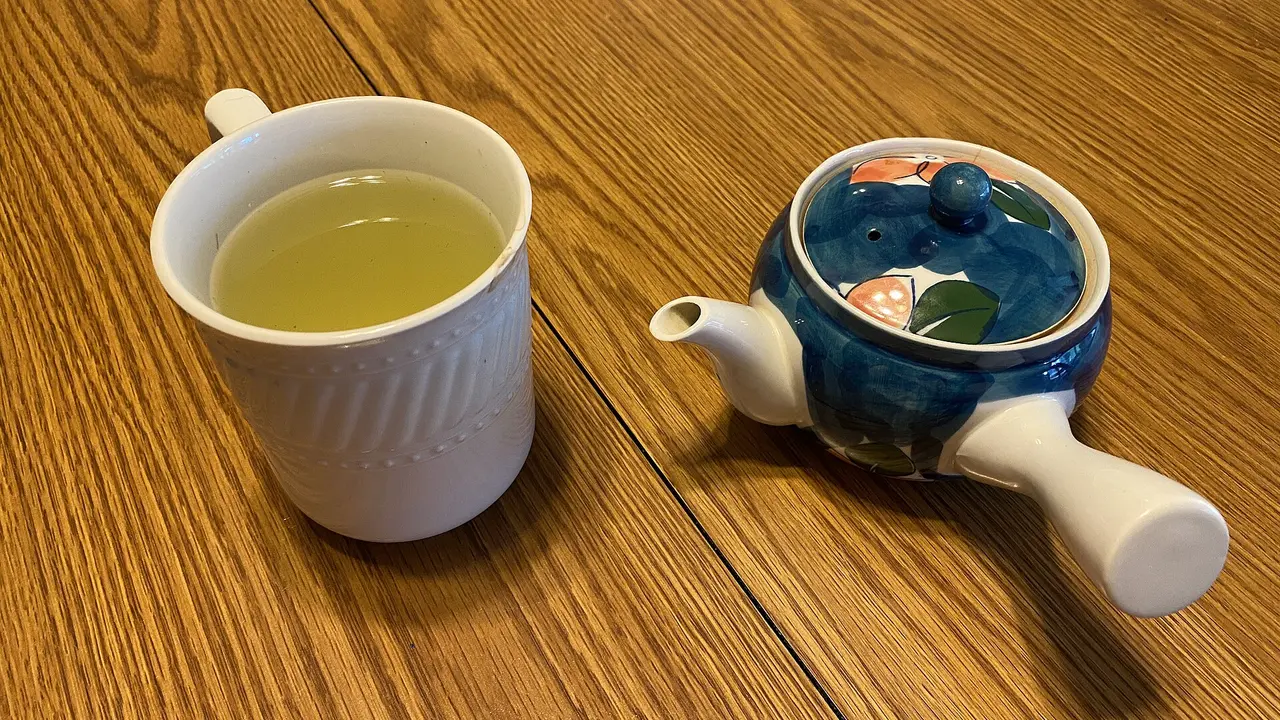
| Bright, grassy, everyday | Sencha煎茶 | Shizuoka, Kagoshima | ~70–80°C, 60 seconds |
| Sweet, thick, almost savoury | Gyokuro玉露 | Yame | ~50–60°C, small volume, 2 minutes |
| Whisked, vivid green | Matcha抹茶 | Uji, Nishio | Buy small; it oxidises fast once opened |
| Roasted, toasty | Sayama sencha, or hōjichaほうじ茶 | Saitama; hōjicha nationwide | Hōjicha takes boiling water — the forgiving one |
| Rice-popcorn aroma | Genmaicha玄米茶 | Nationwide | Cheap, hard to ruin, good for gifts |
Two things not to buy: a large tin of matcha to keep, and anything sold purely on the words "Uji" or "premium" without a harvest year on the package. If you want a proper bowl and whisk rather than the leaf, our matcha and tea ceremony sets guide covers what the kit actually does.
Most single-estate tea, competition lots and small growers' packaging never reach amazon.com — they are sold on Japanese sites or direct. A proxy service ships them; see how to buy from Japan with Buyee vs ZenMarket →.
Tea is a food product, so check your own country's import rules before ordering — some countries limit quantities or require declaration, and a few restrict plant material outright. Sealed commercial packaging in personal quantities is usually fine; a farmer's unlabelled bag may not be.
The Japanese on the package
| Japanese | Reading | What it means |
|---|---|---|
| 一番茶 | ichibancha | First flush — the spring harvest, the best and the most expensive. |
| 荒茶 | aracha | Unrefined raw tea. The unit all the production statistics are counted in. |
| 碾茶 | tencha | Shaded leaf, dried unrolled, ground into matcha. Buying tencha means buying matcha before it is powder. |
| 玉露 | gyokuro | "Jade dew" — shaded and rolled, brewed cool. |
| 被覆 / 覆下 | hifuku / oishita | Shading, and shade-grown. The word behind the whole gyokuro/matcha category. |
| 本簀 | honzu | Traditional straw-and-reed shading, as used in Yame — rather than modern black netting. |
| 火入れ | hiire | The finishing fire. Sayama's extra-strong version is 狭山火入れ Sayama-bi. |
| 茶畑 | chabatake | Tea field. The word on every road sign once you are in tea country. |
Common questions
If I visit one region, which? Uji from Kansai, Shizuoka from Tokyo. Both give you a workshop or museum plus something else worth seeing on the same day.
Is Uji matcha really better? By competition scoring in 2025, Uji swept the tencha top five, so at the top end the answer is yes. In a supermarket tin the label is a regional designation, and much of Japan's tencha now comes from Kagoshima.
Can I bring tea through customs? Usually yes in sealed commercial packaging and personal quantities, but rules differ by country — check yours, especially if you buy loose or unlabelled tea from a farm.
When are the fields green? Late April to May for the first flush, June for the second. Shaded plots will be under cover before harvest.
What if I only like roasted flavours? Start with hōjicha, which is roasted and takes boiling water, then try Sayama sencha for a subtler version of the same idea.
Where to go, what to eat, what to bring home — one Japanese region at a time, with the practical details guides leave out. Free, no spam, unsubscribe anytime.
Sources: national planted area (~33,400 ha), FY2025 aracha output (~75,100 t), the Kagoshima 30,000 t vs Shizuoka 24,100 t comparison, the two-consecutive-year change at the top, 2025 first-flush figures for Kagoshima (8,440 t), Shizuoka (8,120 t, about −19% year on year) and Mie (1,940 t, about −8%), the roughly 70% share held by the top three prefectures, the Kagoshima–Kyoto–Shizuoka tencha ranking and national tencha output of 5,336 t in FY2024, as reported from MAFF statistics by Japanese tea industry trade publications. 79th National Tea Competition (2025) results — Uji City first, Jōyō City second and Nishio third in the tencha production-area awards, all top-five individual tencha scores from Uji, and Yoshitsugu Furukawa of Gokashō scoring 200/200 — from published competition results. Yame's twenty-five consecutive gyokuro Production Area Prizes (2001–2025), the twelve-year individual run to 2012 broken by an Uji grower in 2013, and the honzu straw-and-reed shading method from Japanese tea trade sources; Yame's national gyokuro share is reported inconsistently (figures around 40% and above 50% both circulate without a shared primary citation) and is therefore given qualitatively here. Fukujuen Ujicha Kōbō's stone-mill matcha sessions, location relative to Byōdō-in and JR Uji Station, hours and reservation policy, and the Chazuna tea museum, from Kyoto tourism materials. Fujinokuni Tea Museum's Shimada City location on the Makinohara plateau, 09:00–17:00 hours (last admission 16:30), Tuesday and New Year closures, ¥300 admission and bus access from JR Kanaya Station from Shizuoka tourism materials. Chiran's 1872 planting, 1934 factory, 1938 imperial presentation, the samurai residence gardens' status as a Preservation District for Groups of Traditional Buildings with seven gardens, and the podocarpus-and-tea hedges from Kagoshima tourism and reference materials. Sayama tea's 1945 trademark registration, the Sayama-bi finishing fire, Iruma City Museum ALIT's tea programmes, May–October picking sessions and tōcha tea-fighting experiences from Saitama tourism materials. Prefecture profile scores from NihongoHub's 47-prefecture dataset; rail times from NihongoHub's reachability matrix (approximate, ±20%). Production statistics are revised annually and opening hours change — confirm with the operator before travelling.