Japan's planners for one job only
English-language writing about Japanese planners is enormous and almost entirely about two products: the Hobonichi Techo and Kokuyo's Jibun Techo. Both deserve the attention. But they sit on top of a much stranger layer that nobody outside Japan writes about at all — the 専門手帳 (senmon techō), the planner made for exactly one occupation. A nurse's planner contains an IV drip-rate table. A farmer's contains pesticide dilution charts and a pruning calendar. There is a government-published health-and-safety planner. And roughly thirty prefectures publish their own planner, compiled by their statistics associations, full of local demographic data — a genre that is now quietly going out of print, prefecture by prefecture.
The idea behind them
A Western planner is a container: dated pages, and whatever you decide to put in them. The Japanese senmon techō inverts that. Roughly half the book is a reference manual for a specific job, printed and bound in — tables, formulas, regulations, seasonal calendars — with the diary pages wrapped around it.
The reason this format survives in an era of smartphones is worth stating, because it is not nostalgia. These are books for people who work with their hands in places where a phone is inconvenient or prohibited: a ward round, a field, a construction site. Paper does not need a free hand, does not need to be unlocked, does not run out of battery, and does not have to be wiped down after you touch it with gloves on.
The nurse's planner
Nursing planners and pocket notebooks are the most developed corner of the genre, because nursing generates constant small calculations and lookups under time pressure. Typical contents include shift-friendly calendars for rotating rosters, tables of medical abbreviations and symbols, drug names with side effects, ECG references, and — in more general-purpose editions — sections on the long-term care insurance system.
The signature item is the drip-rate table. Japanese IV sets come in two standards: paediatric, which delivers 60 drops per millilitre, and adult, which delivers 20. To convert an hourly volume into drops per minute you divide the hourly millilitres by 60 and multiply by the drop factor — which collapses into a rule you can do while holding a watch. For a paediatric set, the drops per minute are simply the hourly millilitres. For an adult set, divide the hourly millilitres by 3. A pocket table printing this out saves a nurse doing arithmetic at 3 a.m. beside a patient.
That single detail explains the whole category. The book is not a diary with a themed cover. It is a professional tool that also happens to have a calendar in it — and the calendar is arguably the secondary function.
The farmer's planner
Agriculture has at least two long-running titles, sold from autumn for the following year. Nōka Nikki (農家日記), published by Rural Culture Association Japan, and Nōgyō Techō (農業手帳), produced by the agricultural newspaper Nihon Nōgyō Shimbun, are the established ones.
The reference sections read like a working manual. The 2026 edition of Nōka Nikki includes pesticide dilution quick-reference tables and mixing examples, pest countermeasures, fruit-tree pruning guidance, vegetable planting timetables, unit conversion tables, and pages for farm accounting and business records, alongside daily journal pages and monthly schedules.
Note what that combination implies. A farmer's diary entry — what was sprayed, at what dilution, on which field, on which date — is the compliance record. The reference tables and the diary pages are not two features bolted together; they are the same task. The same logic produces the government-published Anzen Eisei Techō (安全衛生手帳), a health-and-safety planner distributed through the official government publications system.
The planner your prefecture publishes
This is the one that surprises people, including Japanese people from prefectures that do not have one.
A 県民手帳 (kenmin techō), a "prefectural residents' planner," is edited and published by a prefecture's statistics association — the body that handles statistical work for the prefectural government. Alongside the diary it carries local reference material and, characteristically, prefectural statistics: population, industry, agriculture, whatever that prefecture measures about itself. It is, in effect, a pocket almanac of your own prefecture, updated annually, sold to residents.
You will see both 36 and 39 of the 47 prefectures quoted, from different years and different counting rules, and the number has been falling. The prefectures generally listed as not publishing one are Hokkaido, Tokyo, Kanagawa, Kyoto, Osaka, Hyōgo, Hiroshima and Nagasaki — which, read as a list, is essentially the largest metropolitan prefectures. Nagano is repeatedly cited as having the largest circulation in the country.
The pattern in that list is the interesting part. A kenmin techō assumes an identity — that being from your prefecture is a thing you are, rather than an administrative fact — and that assumption holds better in Nagano than in Tokyo.
A genre going out of print
These planners are disappearing, and the mechanism is not simply that people stopped buying paper.
Tokushima and Saga ended publication with their 2025 editions. Yamagata, Nara and Toyama are ending with 2026. The reasons reported are declining circulation and, tellingly, statistics associations dissolving — when the publisher itself winds up, the book stops regardless of demand. Some municipalities have started issuing city-level planners instead.
So if a kenmin techō for a particular prefecture appeals to you, that is a genuinely time-limited proposition, and unlike most "buy it before it's gone" claims this one has dated announcements behind it.
Buying one as a visitor
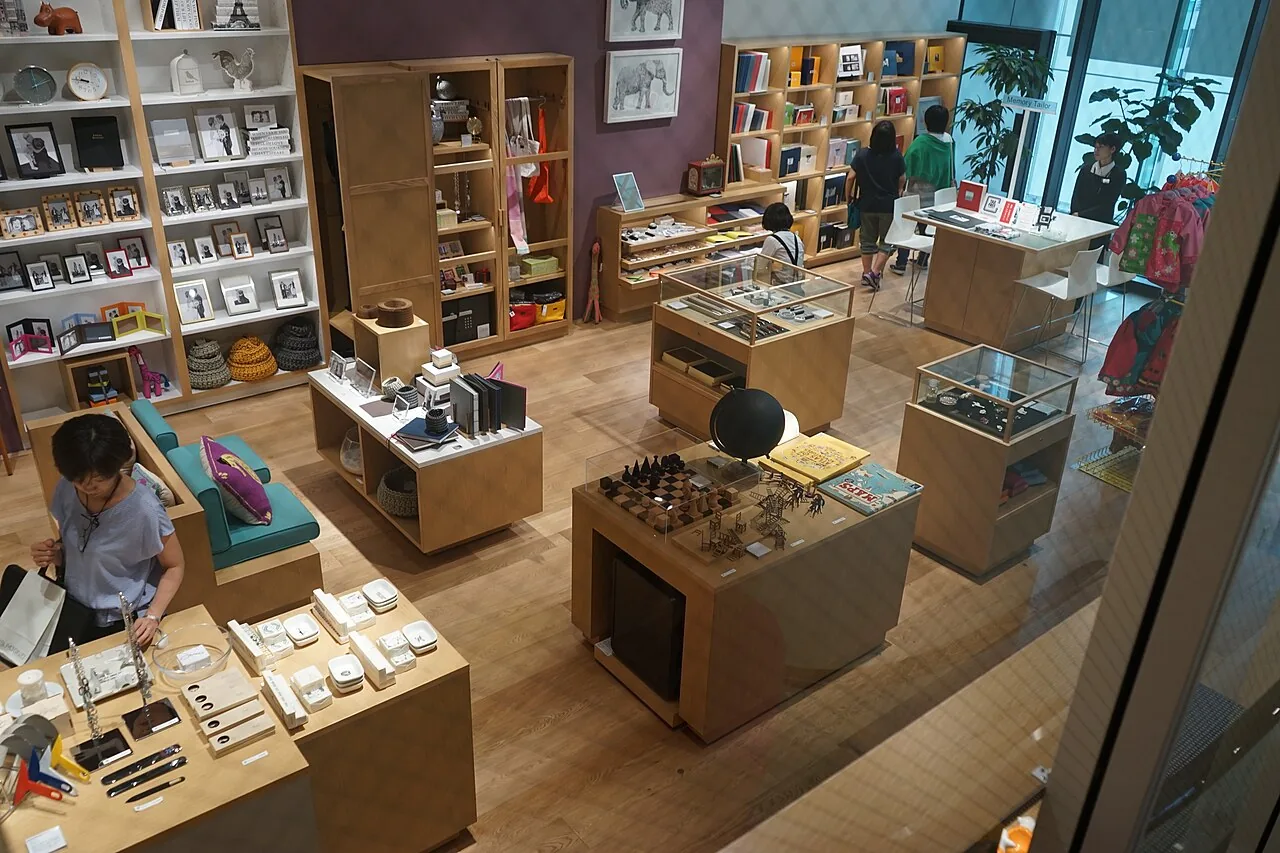
Japan's planner season runs from roughly September, when the following year's editions appear, through to the new year. Large stationery floors — Loft, Tokyu Hands, big-city bookshops, and Kokuyo's own outlets — build entire temporary departments for it, and this is when the specialist titles are easiest to find.
| What you want | Where to look |
|---|---|
| Nurse and medical planners | Large bookshop medical sections and stationery floors during planner season; medical bookshops near teaching hospitals |
| Farming planners | Agricultural publishers' own shops and mail order; regional bookshops in farming areas from around November |
| Prefectural planners | Bookshops within that prefecture, and the prefectural statistics association's own sales channel. Not a national product — this is the whole point |
| Government safety planner | Official government publication outlets |
As a souvenir these are unusually good value: small, light, cheap, dated to the year of your trip, and completely unavailable at home. A kenmin techō from a prefecture you actually visited is a better object than most things sold as souvenirs there — and if it is one of the ones being discontinued, it is a small piece of a genre in its last years.
The reference tables in these books are professional material written in Japanese for licensed practitioners working under Japanese regulations. The drip-rate rule above is included to explain what the genre is, not as clinical guidance, and pesticide dilution tables are specific to products registered in Japan. Enjoy them as documents; do not use them as manuals.
The Japanese you'll actually use
| Japanese | Reading | Meaning |
|---|---|---|
| 手帳 | techō | planner / pocket notebook |
| 専門手帳 | senmon techō | specialist planner — the genre |
| 県民手帳 | kenmin techō | prefectural residents' planner |
| 統計協会 | tōkei kyōkai | statistics association — the publisher |
| 早見表 | hayamihyō | quick-reference table — the heart of these books |
| 看護師 | kangoshi | nurse |
| 点滴 | tenteki | IV drip |
| 農家 | nōka | farming household |
| 希釈 | kishaku | dilution — as in the pesticide tables |
| 手帳売り場 | techō uriba | the planner section — a seasonal department |
Want these to stick? The free JLPT battle quiz drills everyday vocabulary like this with spaced repetition.
Free government collectible cards →, patterned wall blocks →, overhead power lines → and drinks sold in only one prefecture →.
Common questions
Q. What is a senmon techō?
A. A planner made for a single occupation. Roughly half the book is a printed reference manual for that job — tables, formulas, seasonal calendars, regulations — with diary pages around it. Nursing, farming and workplace safety are established categories.
Q. How is that different from a Hobonichi or Jibun Techo?
A. Those are general-purpose planners designed to be filled by the user. A specialist planner ships with occupation-specific content already printed in it, and for many users the reference section is the reason to buy rather than the calendar.
Q. What is actually in a nurse's planner?
A. Shift-friendly calendars for rotating rosters, medical abbreviation and symbol tables, drug names with side effects, ECG references, sections on long-term care insurance in general editions, and IV drip-rate tables.
Q. What is in a farming planner?
A. The 2026 edition of Nōka Nikki includes pesticide dilution quick-reference tables and mixing examples, pest countermeasures, fruit-tree pruning guidance, vegetable planting timetables, unit conversion tables and farm accounting pages, plus daily journal and monthly schedule pages.
Q. What is a kenmin techō?
A. A planner published by a prefecture's statistics association containing local reference material and prefectural statistics alongside the diary — effectively an annual pocket almanac of your own prefecture, sold to residents.
Q. How many prefectures publish one?
A. Sources give 36 or 39 of the 47, from different years and counting rules, and the number is falling. Those generally listed as not publishing one are Hokkaido, Tokyo, Kanagawa, Kyoto, Osaka, Hyōgo, Hiroshima and Nagasaki. Nagano is repeatedly cited as having the largest circulation.
Q. Are they being discontinued?
A. Yes. Tokushima and Saga ended with their 2025 editions, and Yamagata, Nara and Toyama end with 2026, from declining circulation and from statistics associations dissolving. Some municipalities have begun issuing city-level planners instead.
Q. Where can a visitor buy one?
A. Planner season runs from about September to the new year, when large stationery floors such as Loft and Tokyu Hands and big bookshops build dedicated departments. Prefectural planners are sold within their own prefecture rather than nationally.